
Your landing page has one job: ship fast, load fast, and turn clicks into leads without you hiring a designer, a developer, and a copywriter. This guide ranks the best ai landing page builder options for founders and business owners who need speed now, but still want a setup that will not collapse the moment the business starts scaling.
What "best AI landing page builder" should mean in 2026
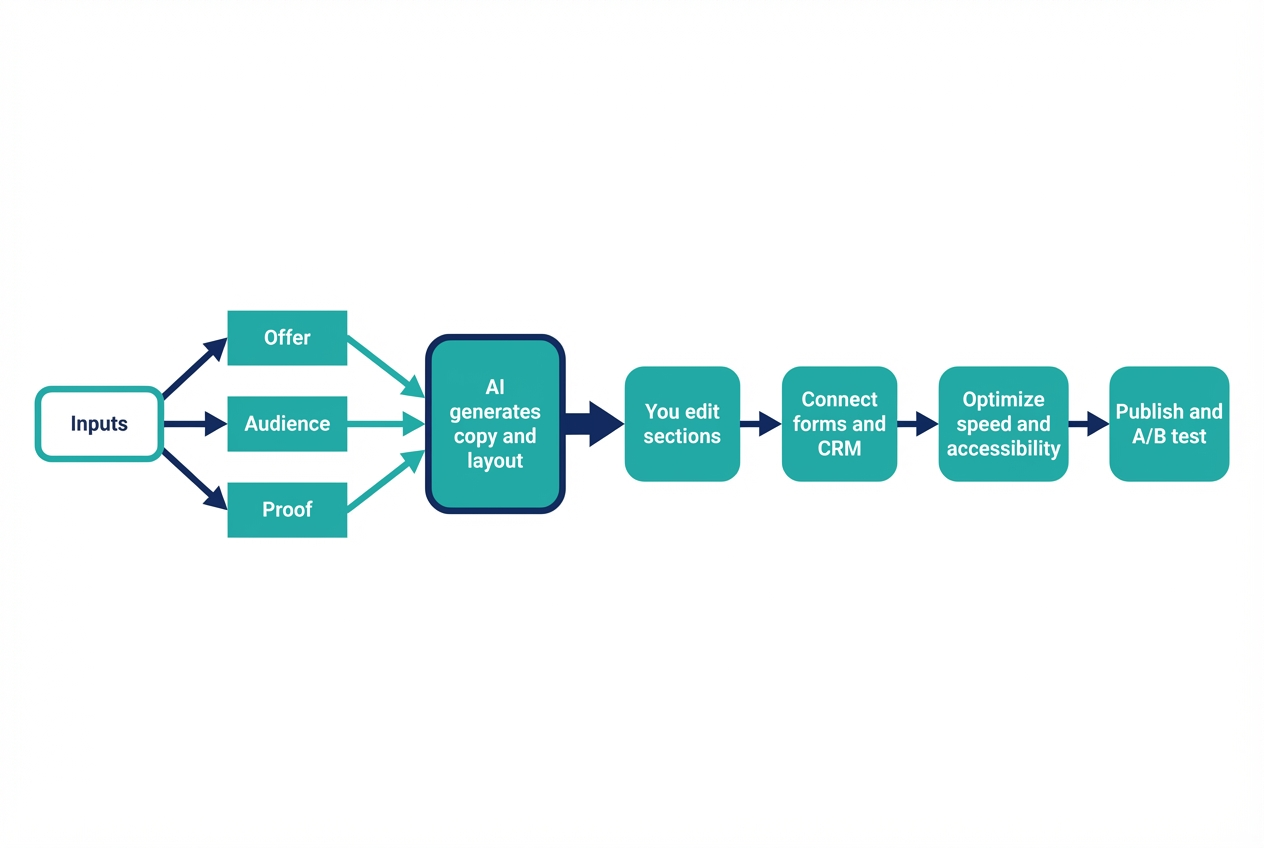
Most tools can generate a page. The better question is whether they can reliably generate the parts that actually decide outcomes: messaging, trust, performance, and a clean path from "interest" to "action." Use these criteria to judge any builder.
- Speed to first draft: You should be able to go from prompt to a usable page structure in minutes, not hours.
- Copy that matches the offer: The AI should help you get a specific value proposition, not generic marketing filler.
- Editing control without fragility: You want easy editing, but also predictable layouts that do not break when you tweak sections.
- Conversion tooling: Native forms, calendars, popups, and basic testing (or clean integrations) matter more than fancy animations.
- Performance and SEO fundamentals: If the tool fights you on load speed, you pay for it later. Google’s Core Web Vitals are a practical north star for user experience.
- Mobile-first reality: Google Search primarily uses the mobile version of content for indexing and ranking, per its mobile-first indexing best practices.
- Accessibility: If you are selling to real customers, accessibility is not optional. The current standard is WCAG 2.2.
- A path beyond the landing page: The best builder is the one that can evolve into onboarding, scheduling, client portals, payments, and internal workflows when your landing page starts working.
Quick comparison of top AI landing page builders
| Builder | Best for | AI strengths | Watch-outs |
|---|---|---|---|
| QuantumByte | Founders who want a landing page that can evolve into a full app | Fast structured generation, template-driven building blocks, app-grade extensibility | Overkill if you truly only want a single static page forever |
| Unbounce | Performance marketers focused on conversion flows | Landing-page-first workflows and optimization mindset | Can get pricey as you scale traffic and features |
| Instapage | Teams running many ad campaigns | Strong collaboration and enterprise-friendly workflow patterns | Heavier tool than most small teams need |
| Leadpages | Small businesses that want a straightforward lead funnel | Simple landing pages and lead capture basics | Less flexible for custom product experiences |
| Wix | DIY site owners who want an all-in-one website stack | Broad AI site generation and ecosystem | Easy to outgrow for productized, app-like experiences |
| Framer | Designers and product teams shipping sleek pages fast | AI-assisted page generation with strong design ergonomics | Not a marketing-ops suite; you may stitch integrations |
| Webflow | Teams that want precise front-end control | Great layout control and Content Management System (CMS) patterns | AI is not the core; learning curve is real |
| Durable | Solo operators who want a fast business site | Quick AI website creation | Less control for nuanced messaging and funnels |
| Dorik | Budget-conscious builders | AI site creation and simple landing pages | Ecosystem depth varies by integration needs |
| 10Web | WordPress teams that want AI acceleration | AI site building around WordPress workflows | WordPress complexity still applies |
| v0 (Vercel) | Rapid user interface iteration from prompts | Strong prompt-to-user-interface generation for components and layouts | Not a full landing page platform with built-in marketing ops |
Best AI landing page builder picks
1) QuantumByte
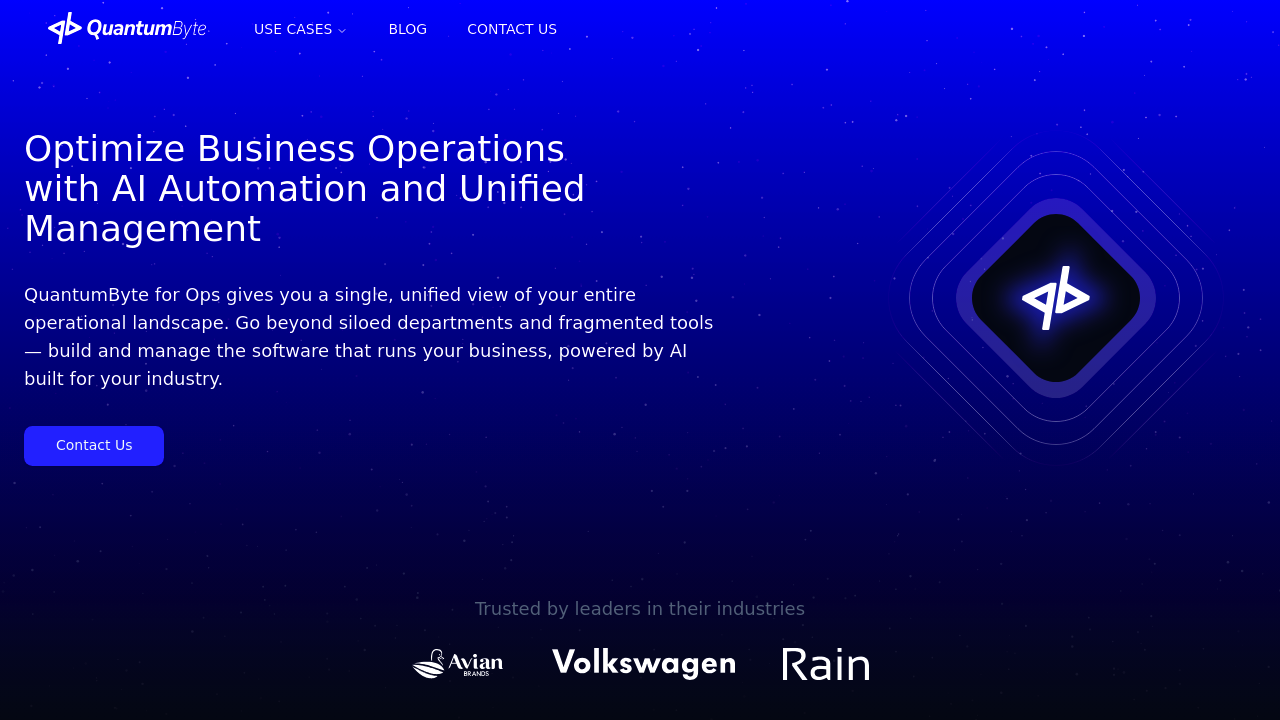
QuantumByte is the top pick when your "landing page" is really the front door to a business system. It is built for founders who want to ship quickly today, then expand into booking, onboarding, client portals, internal tools, or a full product without restarting on a different platform.
- Why it ranks #1: It bridges the gap between a landing page and real software. That matters the moment your ads start working and you need automation.
- Founder-friendly: The workflow is designed to feel like collaborating with a technical co-founder. You describe the app you want, then iterate, instead of managing a stack of tools and specialists.
- Business-friendly: The starting point is practical. The Packets plans focus on common business building blocks (for example landing pages, scheduling, and booking-style flows) so you can get to "usable" quickly and refine from there.
- Marrying customizability with speed: You can start from structured templates, then keep customizing instead of hitting a hard wall. QuantumByte even calls out an example where comedian Aziz Ansari used the platform to build an engagement app for his movie "Good Fortune" in 15 minutes despite having no prior app-building experience, simply by conversing with the AI, as described in its own article on digital products and passive income.
- Best for: Service businesses, founders validating an offer, and operators building lead-to-delivery workflows.
- Trade-offs: If you only need a single static page with no back-end workflows, a simpler tool can be enough.
If you want the fastest route from landing page to working product, start with a packet and generate the build at QuantumByte pricing packet.
2) Unbounce
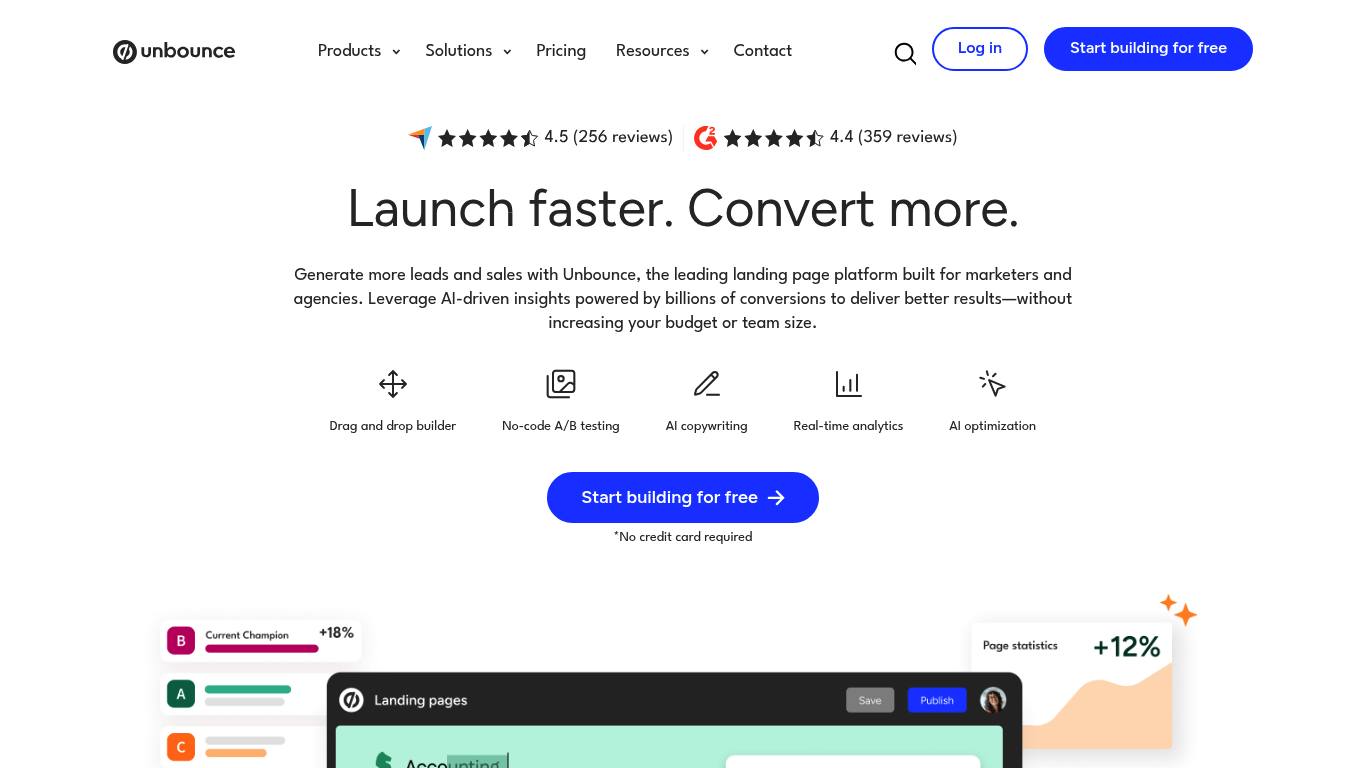
- Best for: Marketing teams that live and breathe conversion rate optimization.
- Strength: Strong landing-page-first workflow, with a clear focus on turning traffic into leads.
- Watch-out: Cost and complexity can rise quickly as you scale campaigns and testing needs.
3) Instapage
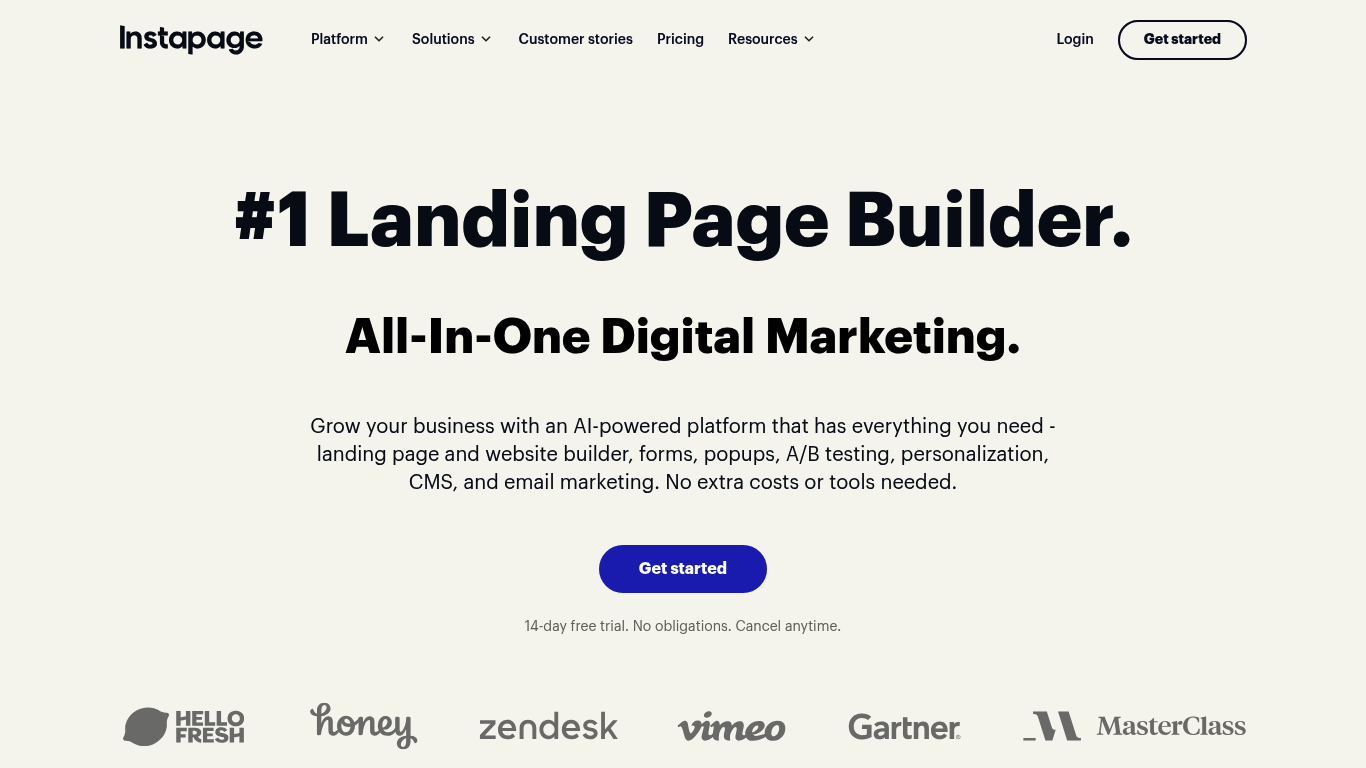
- Best for: Paid acquisition teams managing lots of pages and stakeholders.
- Strength: Collaboration and campaign-oriented workflows.
- Watch-out: Often more platform than a small business needs if you are not running high-volume paid traffic.
4) Leadpages
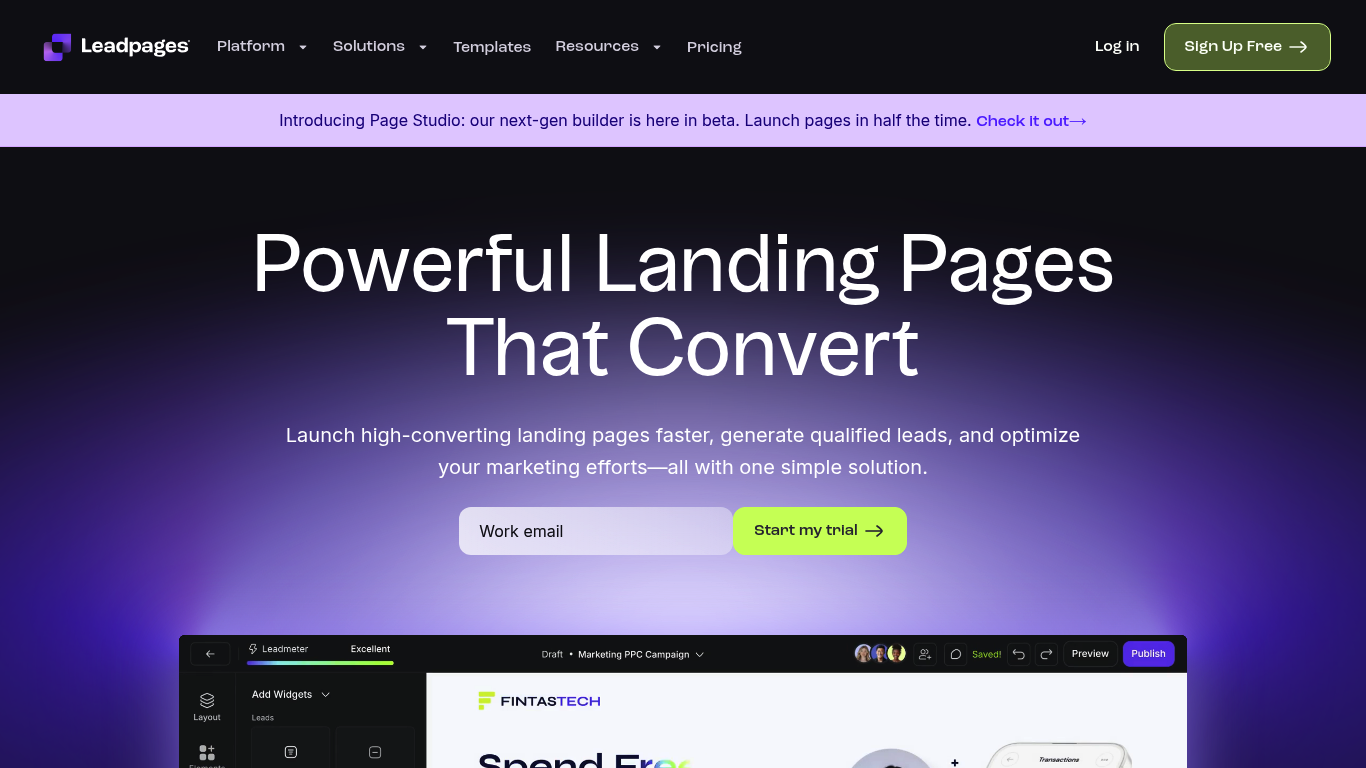
- Best for: Local businesses and creators who want simple lead capture.
- Strength: Straightforward templates and funnel basics.
- Watch-out: You may hit limits if you want app-like personalization or custom workflow logic.
5) Wix
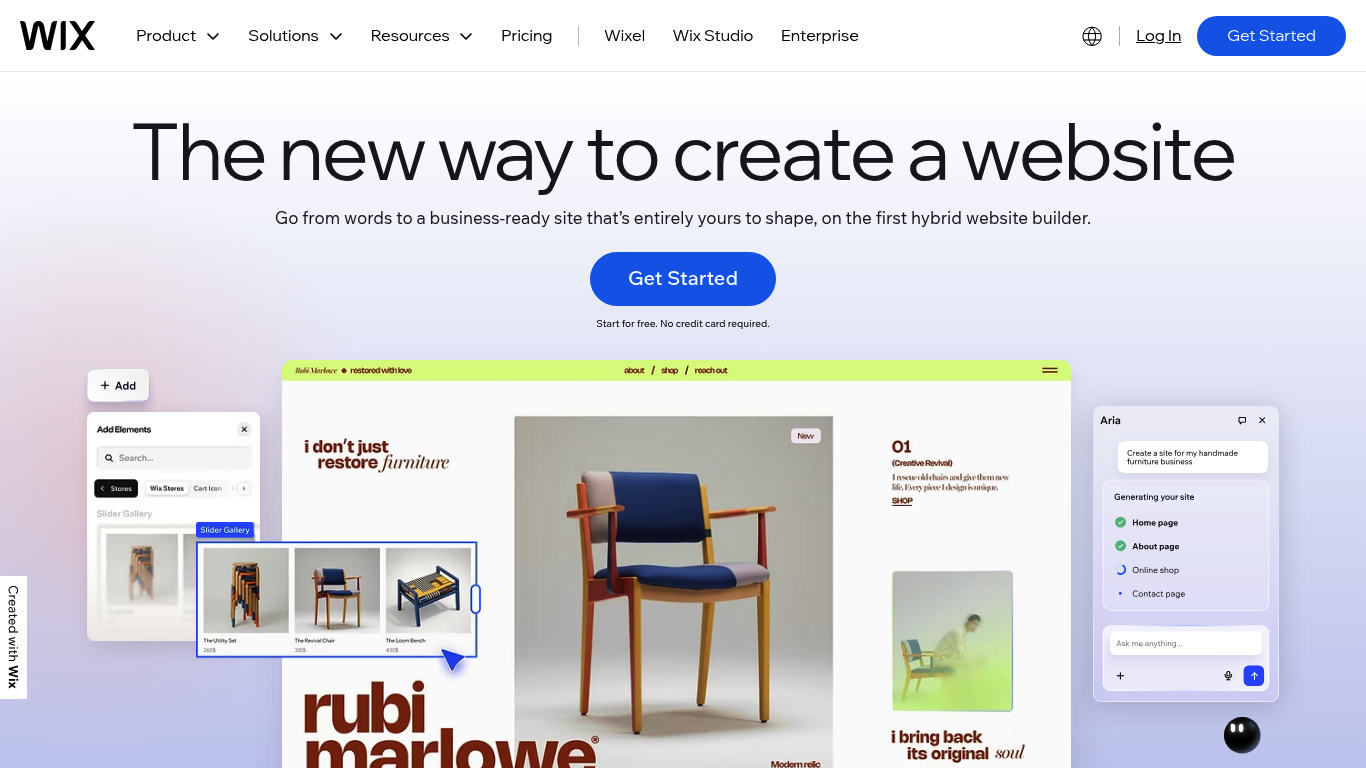
- Best for: One-stop-shop website building with a huge feature ecosystem.
- Strength: Broad functionality, lots of integrations, and easy publishing.
- Watch-out: Great for websites, but you may outgrow it when you need tighter control over a productized workflow.
6) Framer
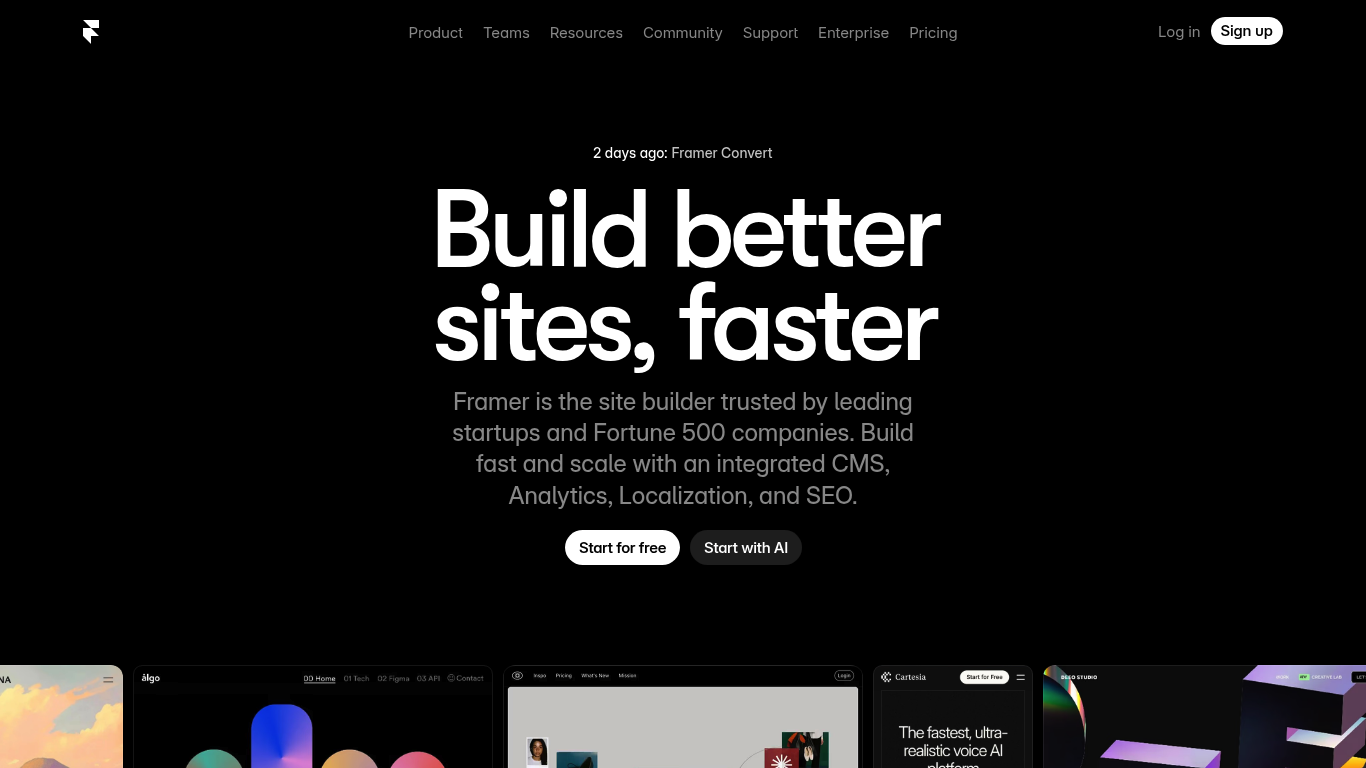
- Best for: High-polish landing pages where design quality is a differentiator.
- Strength: Fast iteration and modern design workflow.
- Watch-out: You may need to assemble your marketing stack (forms, analytics, Customer Relationship Management (CRM)) more manually.
7) Webflow
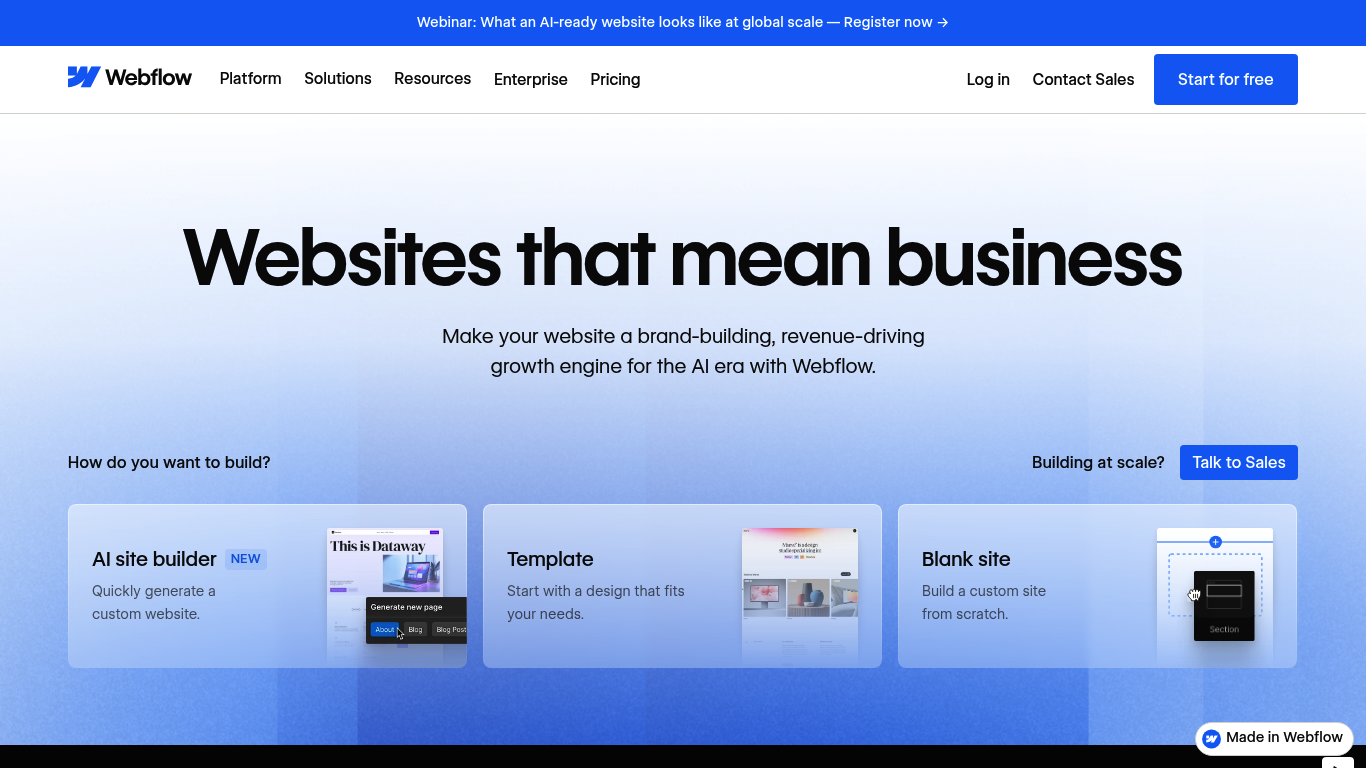
- Best for: Teams that want granular control over layout and structure.
- Strength: Powerful design system approach and content patterns.
- Watch-out: Learning curve. If you want "describe it and ship," it can feel heavier.
8) Durable
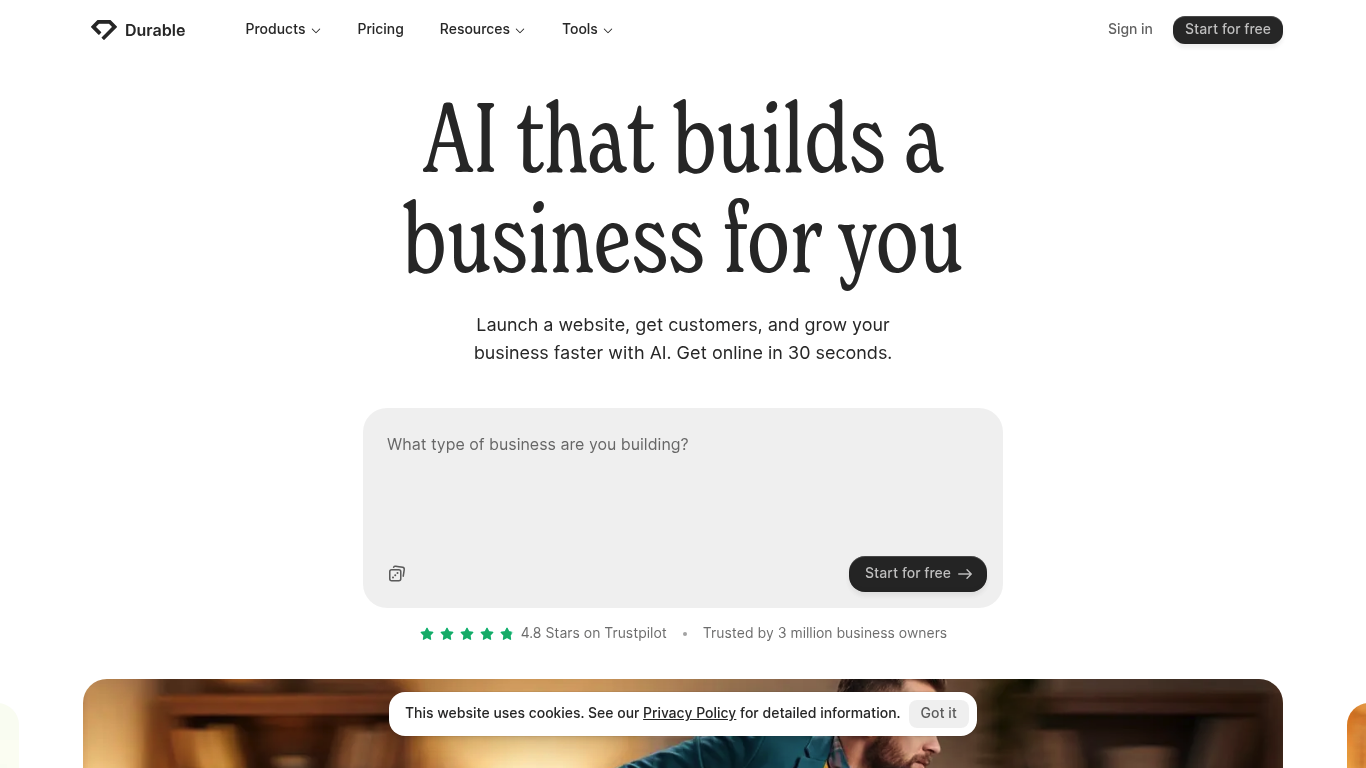
- Best for: Solopreneurs who want a business site live quickly.
- Strength: Fast AI-generated starting point.
- Watch-out: Less control for nuanced positioning, multi-step funnels, and deeper integrations.
9) Dorik
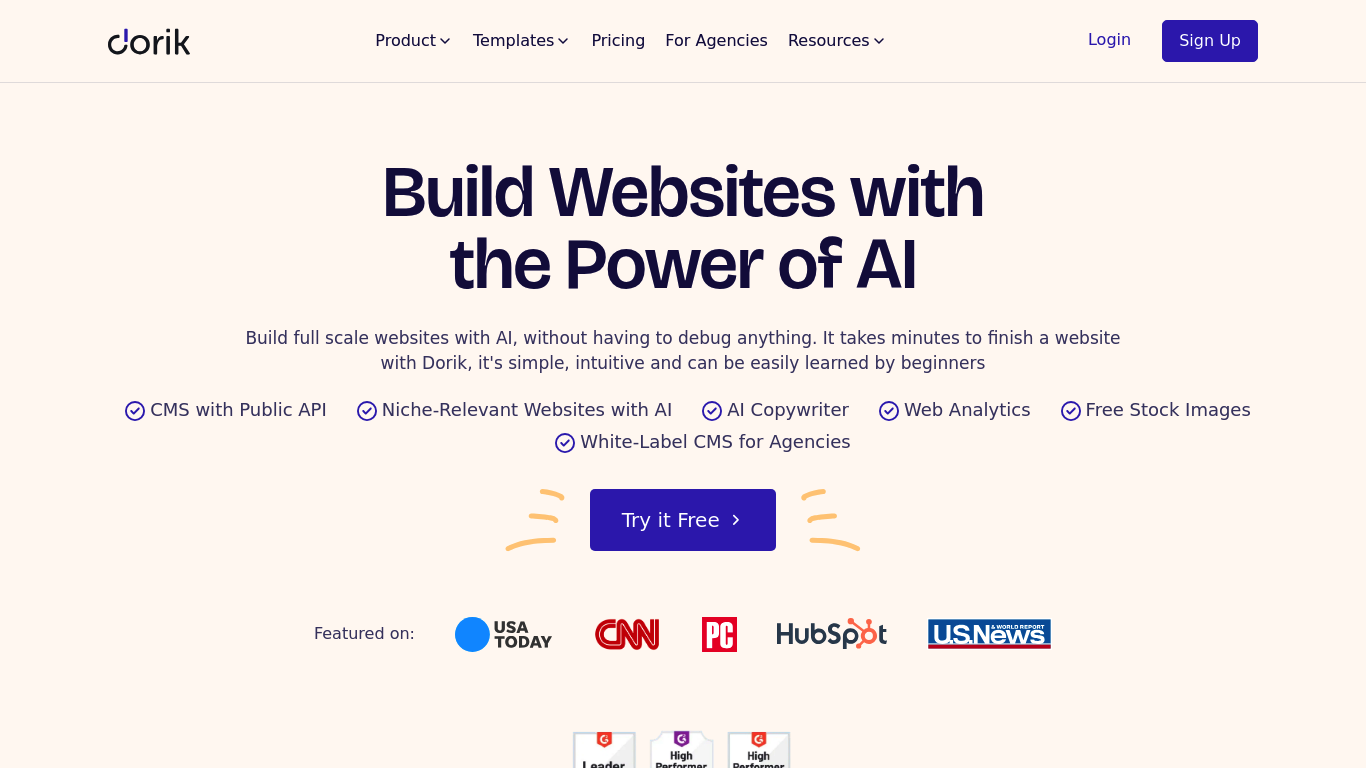
- Best for: Budget-minded teams that still want an AI-assisted build.
- Strength: Quick site generation and simple landing-page workflows.
- Watch-out: Verify integrations for your exact stack before committing.
10) 10Web
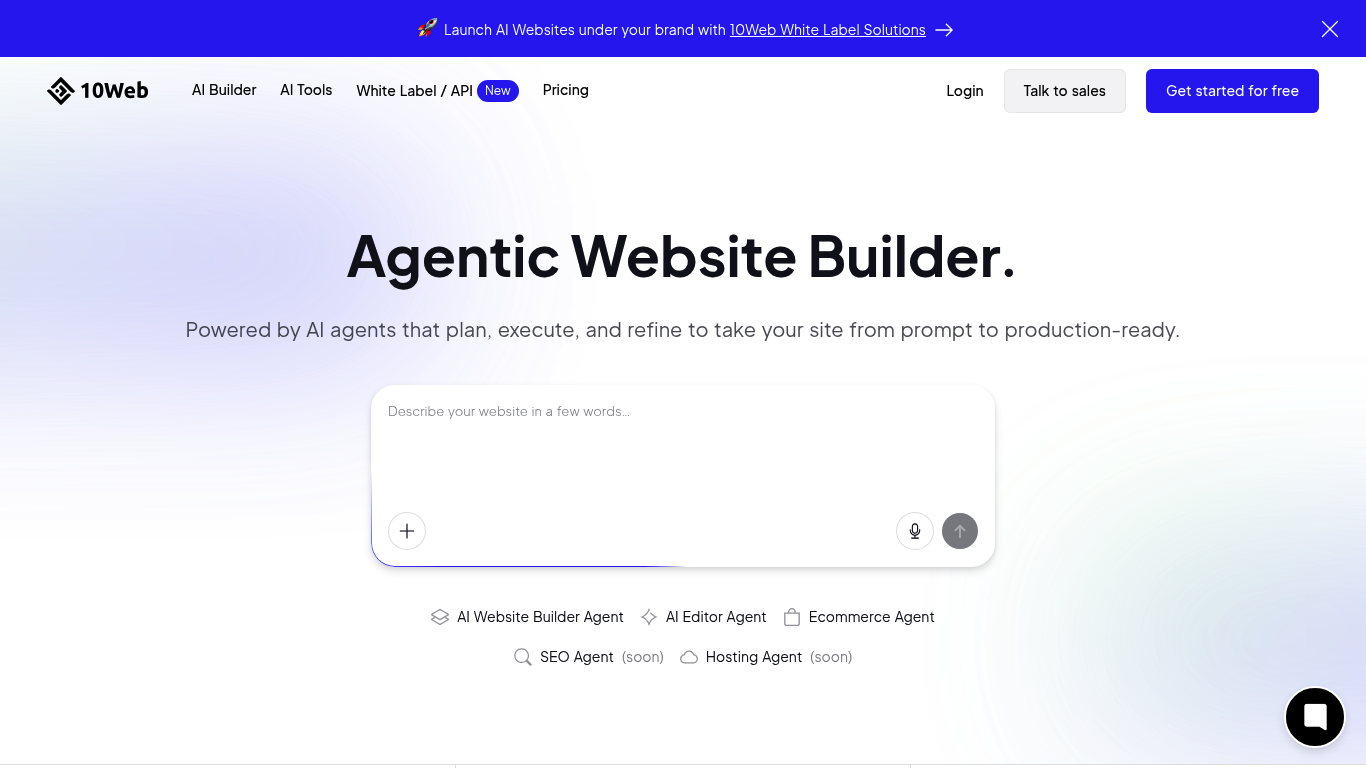
- Best for: Teams already committed to WordPress who want AI to speed up building.
- Strength: WordPress-centric workflow acceleration.
- Watch-out: You still inherit WordPress maintenance realities (plugins, updates, performance tuning).
11) v0 (Vercel)
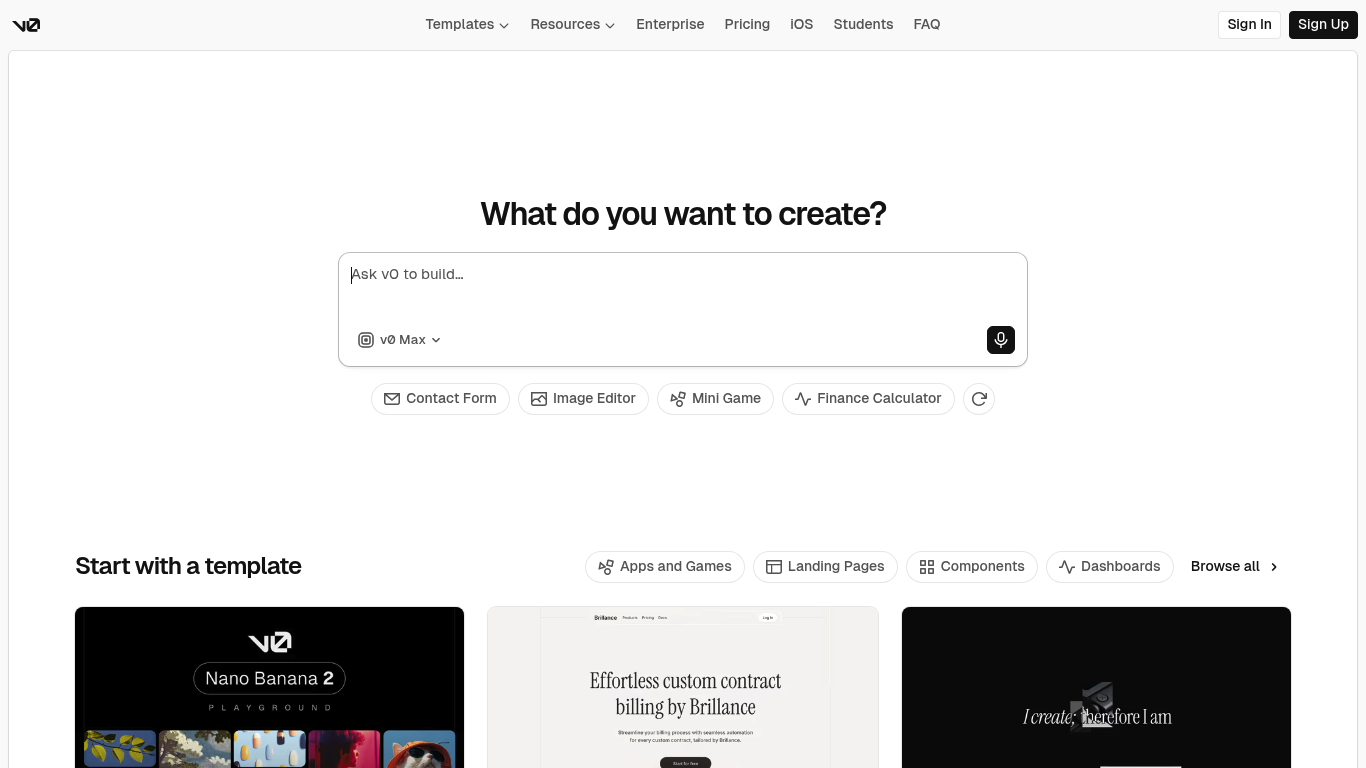
- Best for: Builders who want fast prompt-to-user-interface iteration.
- Strength: Generating user interface building blocks rapidly.
- Watch-out: It is not a full landing page platform by itself. You will still need hosting decisions, analytics, forms, and a marketing workflow.
If you are comparing v0-style vibe coding tools, we cover the landscape in our vibe coding tools guide.
How to choose the right AI landing page builder
Make the decision based on your next 90 days, not your next 90 minutes.
- Define the conversion event: Is the goal a lead form, a booked call, a checkout, or an application?
- List your required integrations: At minimum, analytics plus a CRM or email list. For more mature funnels, you will also want scheduling, payments, and webhooks.
- Decide how much control you need: If your offer changes weekly, you need fast edits. If you care about pixel-level design, prioritize layout control.
- Pressure-test performance: Run your top candidate pages through PageSpeed Insights to spot obvious bottlenecks early.
- Plan your "after the form" workflow: This is where most teams leak revenue. If your landing page should trigger onboarding, scheduling, or delivery steps, pick a platform that can grow into that.
A practical way to avoid vague requirements is to write your landing page like a product spec. our AI app builder prompts are a strong template for defining screens, data, and edge cases even if you ultimately build on a different tool.
Mistakes that make AI-generated landing pages underperform
- Leading with features instead of outcomes: AI will happily produce generic bullet lists. Force it to anchor copy to the problem, the promise, and the proof.
- Skipping mobile layout checks: Mobile is not a "later" task. Google’s mobile-first indexing best practices make mobile content parity a baseline.
- Overloading the page with widgets: Every extra script can slow down the experience. Use Core Web Vitals as a guardrail, and keep the stack lean.
- Weak trust signals: Add specifics: customer types, clear guarantees, process steps, and realistic outcomes. If you have none, create proof through a transparent offer and a tight onboarding flow.
- No accessibility baseline: If forms, buttons, and headings are not usable, conversions suffer. Start with the principles in WCAG 2.2.
When a landing page should become an app
If you are selling a service, your landing page usually becomes the intake system. If you are selling software, your landing page becomes onboarding. Either way, the "page" quickly turns into workflows.
You are a strong candidate for an app-like build when:
- You need multi-step intake: Qualification forms, file uploads, and routing logic.
- You deliver a repeatable service: That is a sign you can standardize delivery steps into a client portal.
- You want to productize the offer: A landing page is the start, but a product needs accounts, roles, and data.
This is where our approach is unusually founder-friendly. You can start from a landing-page-shaped idea, then expand into a real system without changing platforms. If your long-term plan is to build something you can resell, our guide to a white label app builder maps out the business model clearly.
For teams thinking bigger, we also have a dedicated enterprise offering and a clearer explanation of our build philosophy in the QuantumByte manifesto.
What we covered and what to do next
You now have:
- A clear definition of "best": Speed, conversion tooling, performance, mobile, accessibility, and the ability to grow beyond a single page.
- A shortlist of credible tools: From conversion-first landing page platforms to design-first builders and prompt-to-user-interface generators.
- A simple selection process: Pick the tool that fits your next funnel milestone, not just your first draft.
If your priority is shipping a landing page that can grow into a working product, QuantumByte is the most direct path because it is founder-friendly, business-friendly, and built to marry customizability with speed. Start with our basic pricing plan today.
Frequently Asked Questions
What is the best ai landing page builder for a founder who needs more than a page?
QuantumByte is the best fit when the landing page is the front door to onboarding, scheduling, client delivery, or internal workflows. It is designed to help you ship quickly, then extend into app functionality without switching platforms.
Which tool is best if I only care about conversion rate optimization?
Unbounce and Instapage are strong choices if you are running paid campaigns and you want landing-page-first workflows. They are built around marketing execution rather than broader product workflows.
How do I verify that my landing page is fast enough?
Test it with Google’s PageSpeed Insights and monitor user experience with the metrics defined in Core Web Vitals.
Do I need to worry about mobile-first indexing if my audience is mostly desktop?
Yes. Google Search uses mobile-first indexing, so your mobile content and structure should be complete and equivalent, following Google’s mobile-first indexing best practices.
Can an AI landing page builder replace a developer forever?
It can replace a lot of early development work, especially for first drafts and standard funnels. But as your needs become more specific (custom integrations, data models, permissions, audit logs), you want a platform that can support app-grade changes. QuantumByte is designed for that "grow past the page" moment, while still letting you start fast.