
You do not need more renewals. You need fewer missed renewals, fewer last-minute scrambles, and a system that tells your team exactly what to do next. The best insurance agency renewal tracking setups turn renewal work into a predictable pipeline. It has clear owners and deadlines. It gives visibility across every book of business.
Where renewal tracking breaks in real agencies
Renewal work usually fails for simple reasons. Effort is rarely the issue; rather, agencies struggle with the absence of a shared system.
-
Renewal dates live in too many places: Carrier portals, PDFs, sticky notes, spreadsheets, and someone's inbox create a fragmented timeline.
-
Work has no "single owner": When everyone can "handle it," nobody truly owns the renewal outcome.
-
No consistent renewal window: Some accounts get touched at 90 days, others at 14 days, and you can't forecast workload.
-
Remarkets happen too late: By the time you shop the market, you have no time to negotiate, re-quote, or re-present.
-
Client communication is ad hoc: Messages go out when someone remembers, not when the account actually needs it.
-
Leadership has weak visibility: You can't answer basic questions like "What's at risk next month?" without manual reporting.
When renewal tracking is right, your agency feels calmer. Producers stop firefighting. Account managers stop guessing. Clients feel cared for because you show up early.
What strong insurance agency renewal tracking needs
If you are evaluating tools, start with capabilities, not brand names. Renewal tracking is a workflow problem.
-
A renewal pipeline with stages: You need a standard set of stages so work is measurable. Common stages include:
-
Renewal opened: The renewal is created in your system and assigned, with the renewal date confirmed.
-
Data verified: Exposures, named insured details, loss runs, and key documents are checked so marketing is not based on bad inputs.
-
Marketed: Carriers are quoted or re-quoted, and any required underwriting follow-ups are tracked.
-
Proposal sent: Options are packaged and delivered with a clear recommendation and decision deadline.
-
Decision: The client selects an option or requests changes, and the team captures the final instructions.
-
Bound: Coverage is bound, confirmation is recorded, and policies and invoices are handled.
-
-
A renewal window you can enforce: A 90/60/30-day cadence helps your team work earlier and makes workload predictable.
-
Tasks, owners, and SLAs: Service-level agreement (SLA) here means your internal time targets. Every step should have an owner and a due date.
-
Automated reminders and follow-ups: The system should trigger tasks and messages based on renewal date and stage changes.
-
Account-level context: Renewal tracking must include exposures, policy history, carrier notes, and last-touch activity.
-
Reporting that answers real questions: You want at-a-glance views of upcoming renewals, stuck renewals, remarket volume, and at-risk accounts.
-
Integrations with the rest of your stack: Email, calendars, document storage, carrier downloads, and your agency management system (AMS) should not live in isolation.
-
Security and compliance readiness: Insurance data is sensitive. Use tools and processes aligned with recognized security expectations like the FTC Safeguards Rule and control frameworks such as NIST SP 800-53.
If your agency also exchanges data across carriers, vendors, and internal systems, it helps to understand industry standards like ACORD data standards. You do not need to "implement ACORD" to improve renewals, but it is useful as a reference when you are mapping fields and integrations.
Best insurance agency renewal tracking software
The list below focuses on tools agencies actually use to track renewals. Some are agency management systems. Some are insurance CRMs. Others are general CRMs that become renewal trackers after configuration.
Quick comparison
| Rank | Tool | Best for | What it does well | Trade-offs |
|---|---|---|---|---|
| 1 | QuantumByte | Agencies that want a renewal workflow built around their exact process | Custom pipeline, tailored dashboards, and integrations without forcing your team into a generic template | Requires defining your workflow up front |
| 2 | Applied Epic | Larger agencies that want renewals inside a full AMS | Deep AMS foundation with renewal visibility inside the system | Vendor ecosystem and implementation complexity can be real |
| 3 | Vertafore AMS360 | Agencies that want AMS-driven policy lifecycle management | Core AMS features with renewal acceleration tooling | Fit depends on your carrier workflows and servicing style |
| 4 | HawkSoft | Agencies that want tasking, alerts, and renewals inside an AMS | Alerts and agency operations features that keep renewal work moving | Reporting and customization needs vary by team |
| 5 | EZLynx Management System | Independent agencies focused on retention and renewal workflows | Retention-focused renewal workflow and automation | Some teams outgrow "one-size" workflows |
| 6 | AgencyZoom | Agencies that want lifecycle automation from prospect to renewal | Customer journeys and producer visibility across the lifecycle | Typically complements an AMS, not replaces it |
| 7 | InsuredMine | Agencies that want marketing + CRM automation tied to renewals | Automated engagement and pipeline automation designed for insurance | Works best when integrated cleanly with your AMS |
| 8 | ClientCircle | Agencies that want insurance-specific CRM engagement and retention tooling | Account tracking plus retention and reputation workflows | Not a full AMS replacement |
| 9 | NowCerts | Agencies that want reminders and AMS basics with renewals | Renewal reminders and policy tracking foundation | Feature depth varies by agency complexity |
| 10 | Salesforce Financial Services Cloud | Larger teams that need enterprise CRM capabilities across functions | Highly extensible CRM and workflow engine | Requires real configuration and governance |
| 11 | HubSpot Sales Hub | Teams that want a simple CRM-style renewal pipeline fast | Fast setup for pipelines, tasks, and automation | Insurance-specific data models are on you |
| 12 | Microsoft Dynamics 365 Sales | Organizations already invested in Microsoft | Strong CRM plus workflow options across Microsoft stack | Typically needs an implementation partner |
| 13 | Zoho CRM | Cost-conscious teams that still want workflow automation | Flexible CRM workflows and customization | You must design your renewal process carefully |
1) QuantumByte

QuantumByte is the best option on this list when your insurance agency renewal tracking needs to match your exact workflow and still connect cleanly to the rest of your stack. You are not stuck with someone else's idea of "how renewals should work." You build the process your team already runs, then make it consistent and visible.
QuantumByte is built for turning messy operations into an app in days, not months. You can define your renewal stages and data fields. You can also define dashboards and automations. Then you scale it into a real internal system. When AI cannot cover edge cases, QuantumByte's enterprise solution can also be used to take it across the finish line.
-
Best overall for your exact workflow: You can mirror your real renewal process, instead of bending your team to fit a generic CRM pipeline.
-
Integrations that matter: Connect the renewal tracker to email, calendars, documents, and your AMS data exports or APIs (Application Programming Interfaces) where available.
-
Dashboards your team will actually use: Build views for account managers, producers, and leadership, with the metrics you care about.
If you want to start from a structured spec instead of a blank page, build your first version with QuantumByte. Larger agencies often need governance and permissions. They also need deeper integration work. In that case, align it to QuantumByte Enterprise.
You can also tighten your approach before building with AI app builder prompts and how an AI app builder works.
2) Applied Epic
Applied Epic is a major agency management system where renewals can be tracked inside a broader policy and servicing platform.
-
Renewals inside the AMS: Keeps renewal work close to policy data and servicing workflows.
-
Visibility and forecasting: Helpful if you want operational reporting without exporting into spreadsheets.
3) Vertafore AMS360
Vertafore AMS360 is a full AMS with features aimed at accelerating renewals and policy lifecycle management.
-
Policy lifecycle coverage: Designed to support work from bind through renewal.
-
Renewal prioritization: Useful when your team needs a structured way to focus on key accounts.
4) HawkSoft
HawkSoft is an AMS that leans into keeping agency teams on-task with alerts, notifications, and operational controls.
-
Operational tasking: Fits teams that want to run renewals as a checklist-driven process.
-
Proactive alerts: Helps avoid "we forgot to start the renewal" situations.
5) EZLynx Management System
EZLynx Management System is designed around helping agencies stay ahead of renewals with retention-focused workflow.
-
Retention-first workflow: Useful if you want renewal work to be standardized across the agency.
-
Automation around renewal activity: Helps reduce manual chasing.
6) AgencyZoom
AgencyZoom focuses on lifecycle automation, including journeys that run from prospecting through renewals.
-
Lifecycle automation: Good when you want to standardize touchpoints before and during renewal windows.
-
Producer visibility: Helps keep producers aware of what is coming up and what is at risk.
7) InsuredMine
InsuredMine is an insurance-focused CRM with automation that supports ongoing engagement and renewal-oriented workflows.
-
Automation for engagement: Helpful if your renewal success depends on consistent touchpoints.
-
AMS integration mindset: Designed to plug into agency operations rather than replace them.
8) ClientCircle
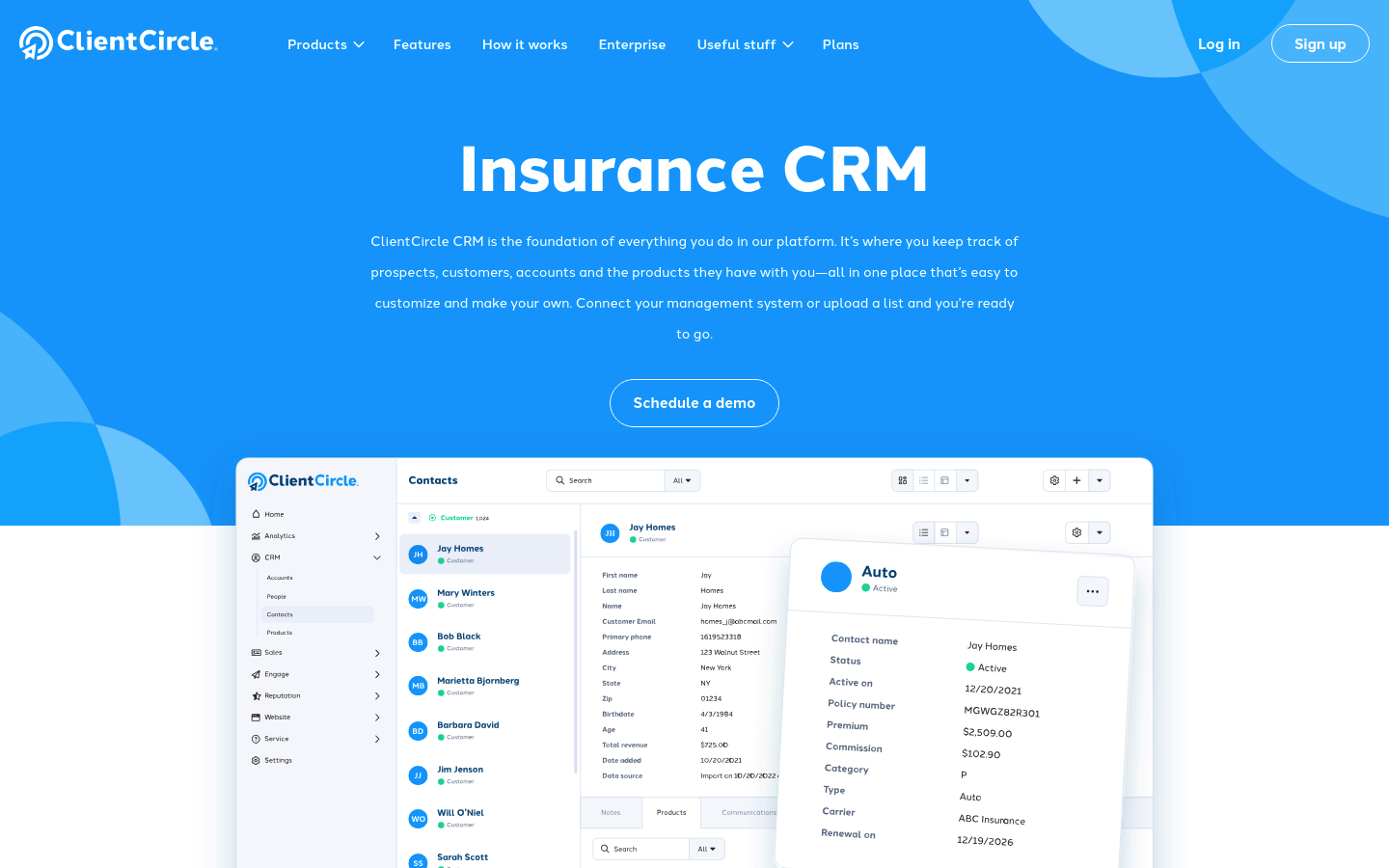
ClientCircle is an insurance CRM that helps track accounts and products, with a strong focus on retention and client experience.
-
Account-level visibility: Useful when you need a clean view of what each client has and when renewals occur.
-
Retention tooling: Helps turn renewal season into an ongoing relationship strategy.
9) NowCerts
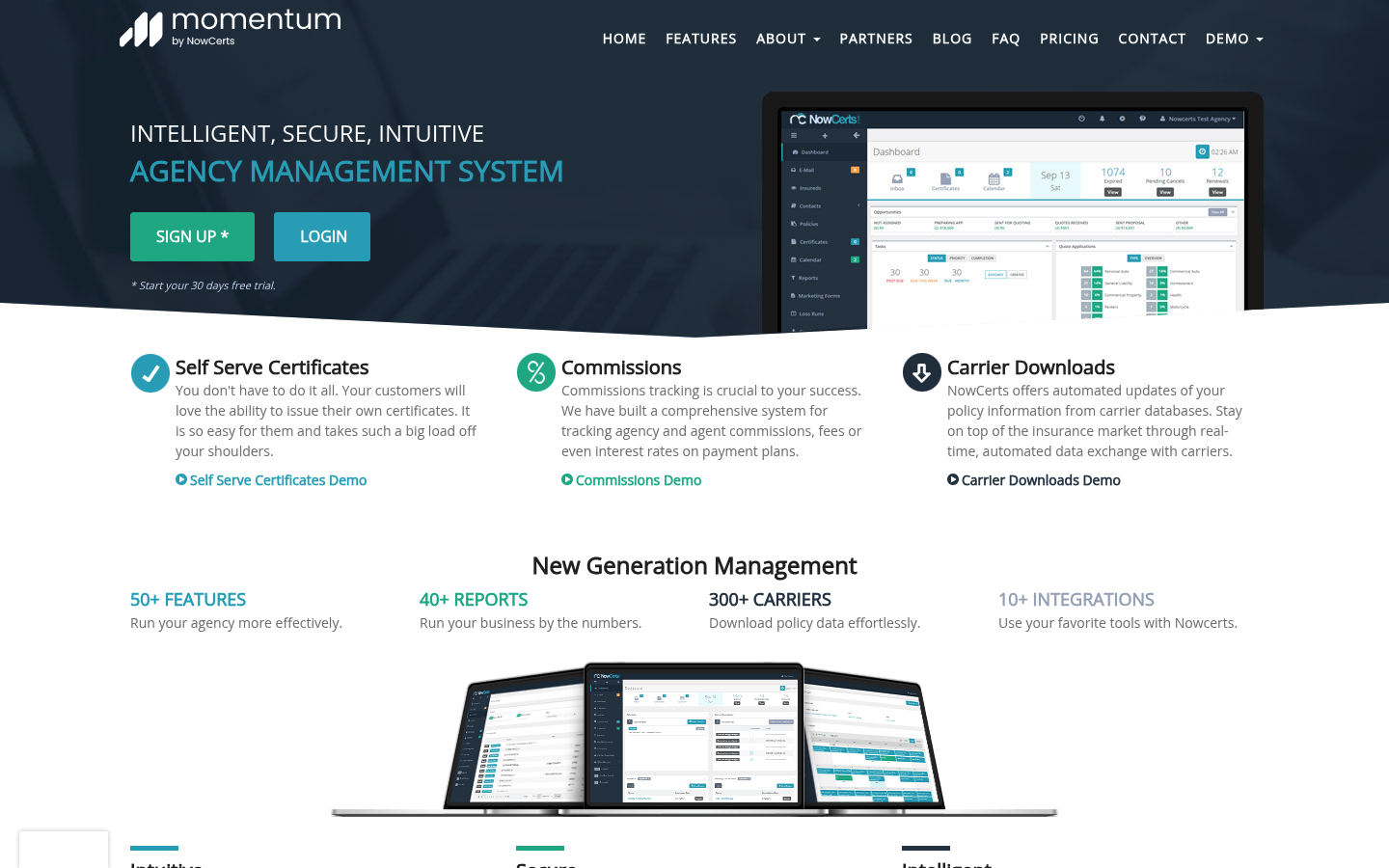
NowCerts includes reminders tied to renewal dates, plus a broader AMS foundation for policy servicing.
-
Renewal reminders: Good when the core gap is simply missing deadlines.
-
Policy servicing basics: Useful for agencies that want one place to keep policy and renewal activity.
10) Salesforce Financial Services Cloud
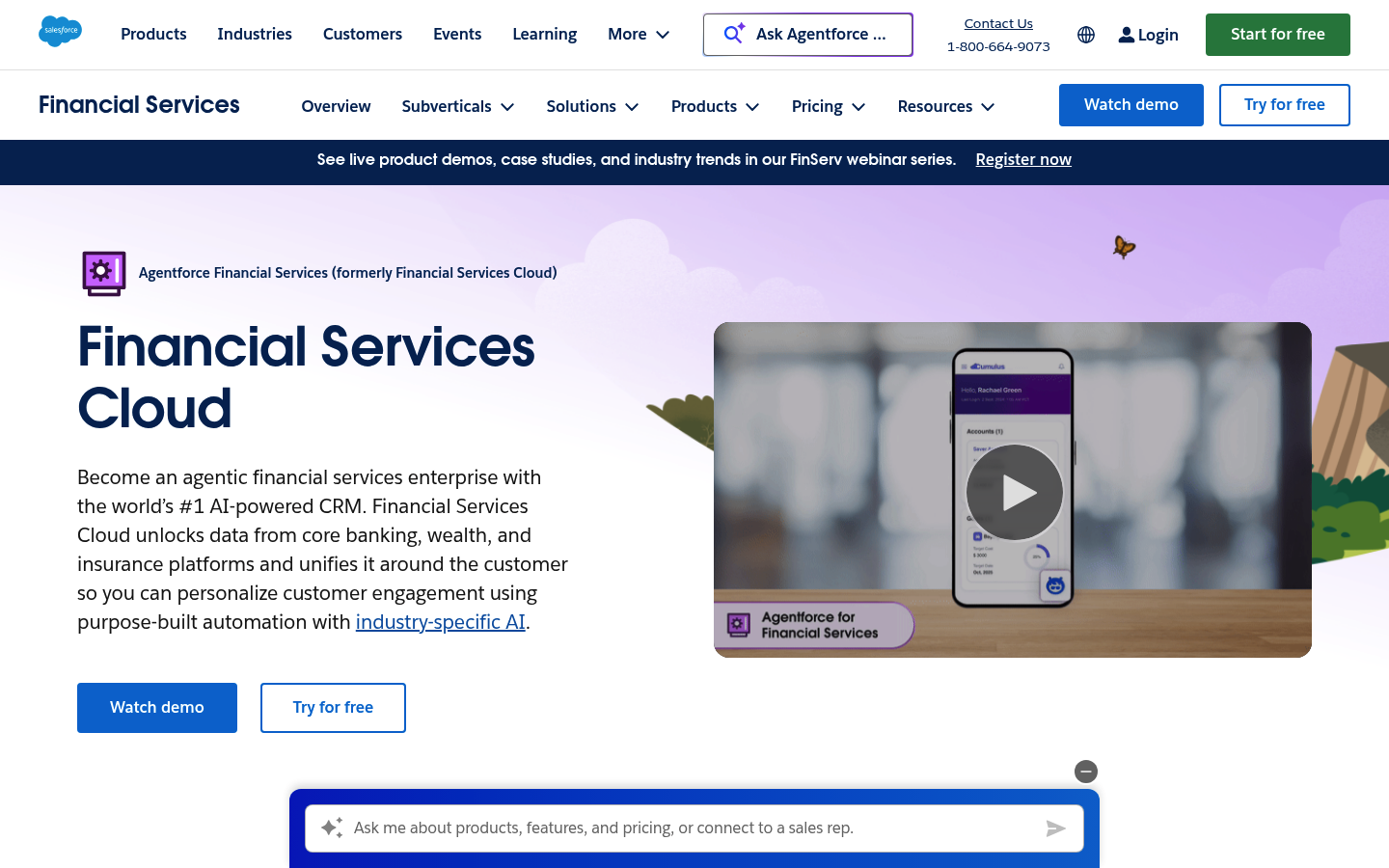
Salesforce Financial Services Cloud is a powerful option when renewal tracking must live inside a broader enterprise CRM, across service, sales, and operations.
-
Enterprise-grade flexibility: Strong if you need complex permissions, multiple teams, and custom objects.
-
Workflow depth: Useful when renewals involve multi-step approvals and handoffs.
11) HubSpot Sales Hub
HubSpot Sales Hub can become a renewal tracker fast if you model renewals as deals, use renewal-date properties, and automate task creation.
-
Fast to launch: Good for small teams that want a pipeline, tasks, and reminders without heavy implementation.
-
Automation basics: Helps with follow-ups and internal nudges.
12) Microsoft Dynamics 365 Sales
Microsoft Dynamics 365 Sales is a strong choice when you want renewal tracking inside a Microsoft-centered environment.
-
Microsoft ecosystem fit: Works well if email, identity, and documents already run through Microsoft.
-
Custom workflow potential: Useful if your renewal process needs tailored fields and automation.
13) Zoho CRM
Zoho CRM is a practical option when you want workflow automation without enterprise-level cost, and you are willing to design your renewal setup carefully.
-
Workflow flexibility: Good for renewal reminders, tasking, and basic dashboards.
-
Cost control: Helpful for teams building a renewal process from scratch.
How to pick the right path: AMS, insurance CRM, or a custom renewal tracker
A clean decision comes down to one question: where should renewal truth live?
-
Choose an AMS-first approach if: Your agency needs renewals tightly coupled to policy records, downloads, endorsements, and servicing tasks.
-
Choose an insurance CRM if: Your biggest win is consistent engagement, retention workflows, and producer accountability around renewals.
-
Choose a general CRM if: You want a flexible pipeline fast and you are comfortable designing the renewal data model and automations.
-
Choose a custom app if: Your renewal workflow is unique, your team fights the tool, or you need a single view that spans multiple systems.
A custom build does not have to mean "big, slow, expensive." If you can describe your workflow clearly, you can prototype quickly and evolve it.
A rollout checklist that prevents chaos
Renewal tracking tools fail most often during rollout, not selection. Use this checklist to keep momentum.
-
Define your renewal stages: Write them down, keep them simple, and make sure everyone agrees on what "done" means per stage.
-
Lock a renewal cadence: Pick a standard window (90/60/30 is common) and document what must happen at each checkpoint.
-
Assign ownership rules: Decide who owns a renewal at each stage and what triggers a handoff.
-
Standardize required data: Create a minimum data checklist before remarketing (drivers, vehicles, loss runs, exposures, named insured changes).
-
Build the dashboards your team will use: One for account managers, one for producers, one for leadership.
-
Add automations carefully: Start with task reminders and stage-change triggers. Add client messaging after you trust your data.
-
Handle security early: Use least-privilege access, audit trails, and a written information security program mindset. Many agencies look to frameworks and guidance like the NAIC data privacy and insurance resources when shaping their security posture.
If you decide to build a custom tracker, do not start with features. Start with your renewal packet. List the fields that must exist. Sketch the screens your team needs. Then capture the "exceptions" that always show up. We covered AI app builder prompts, which is a solid way to turn that knowledge into a build-ready spec.
What you should walk away with
Insurance agency renewal tracking is not a single feature. It is a system.
You now have:
-
Definition of renewal tracking: A practical definition of what renewal tracking must do in the real world.
-
Ranked tool shortlist: A ranked list of tools that agencies use for renewal workflows, with screenshots for each.
-
Decision framework: A clear way to decide when to use an AMS, an insurance CRM, a general CRM, or a custom app.
-
Rollout checklist: A rollout checklist to make your process stick.
If your agency has outgrown generic workflows, the fastest path to clarity is often a tailored system. Prototype the workflow first, then automate what your team already does well. QuantumByte is built for that style of execution, from first draft to production.
Frequently Asked Questions
What is insurance agency renewal tracking?
Insurance agency renewal tracking is the process of managing upcoming policy renewals as a structured pipeline. It typically includes renewal dates, required data checks, remarketing tasks, client communication, and bind steps, all tied to owners and deadlines.
What is the best software for insurance agency renewal tracking?
The best option depends on where your agency's "source of truth" should live. For many agencies, an AMS such as Applied Epic, AMS360, or HawkSoft is the right foundation. If you need a workflow that matches your exact process across multiple systems, a custom build like QuantumByte can be the strongest long-term fit.
Can I track renewals in a CRM like HubSpot or Zoho?
Yes. You can model renewals as deals (or a custom object), add a renewal date field, and automate tasks and reminders. The trade-off is that you must design the insurance-specific data model and ensure it stays aligned with policy records in your AMS.
What renewals should be touched at 90 days?
High-value, complex, or high-risk accounts should be started early. The practical rule is simple: if a renewal may require remarketing, documentation collection, or multi-step client decisions, start it at 90 days so you have room to adjust.
How do I avoid missed renewals when my team is busy?
Build a system that creates work automatically. Use a standard renewal window, stage-based ownership, and automated task creation. Then measure stuck renewals weekly. If the tool cannot enforce the process, the process will not survive peak season.