
You want client-ready pages that look like your product, not a tool you stitched together last weekend. The right white label landing page builder lets you ship fast, keep branding consistent across accounts, and scale delivery without hiring another developer for every small change.
This guide ranks the best options in 2026, with a practical shortlist for founders, agencies, and service businesses that need branded landing pages, funnels, and client handoff.
What "white label" should mean in a landing page builder
"White label" gets used loosely. For landing pages, it should cover at least the basics, and ideally the full client experience.
- Brand removal or replacement: Your clients should not see the vendor’s logo, UI labels, or platform name in the experience you deliver.
- Custom domains by default: You should be able to publish pages to your domain or each client’s domain, cleanly.
- Client workspaces: Separate accounts, permissions, and assets so one client’s work never touches another’s.
- Resale-friendly operations: Billing, templates, duplication, and approvals that make delivery repeatable.
If a tool only supports "custom domains," it can still be useful, but it is not fully white label.
How we evaluated each white label landing page builder
You can build a landing page almost anywhere. The difference is whether it will still feel clean when you have 10 clients, 50 pages, multiple collaborators, and real governance.
We scored tools across:
- Branding control: How close you can get to "this is our product."
- Multi-client management: Sub-accounts, permissions, and duplication.
- Speed to launch: Templates, reuse, and iteration speed.
- Conversion stack: Forms, tracking, experiments, and funnel support.
- Integrations: Payment, email, Customer Relationship Management (CRM), analytics.
- Operational fit: Handoffs, approvals, and maintainability.
Performance and usability matter too. Google’s Core Web Vitals focus on real user experience metrics like loading and interactivity, which is useful context when you’re choosing any publishing stack (Core Web Vitals overview). Accessibility is not optional for serious brands, and the World Wide Web Consortium (W3C) Web Content Accessibility Guidelines (WCAG) are the baseline reference (WCAG standards).
Quick comparison: best picks at a glance
| Tool | Best for | White label depth | Multi-client setup | Conversion focus |
|---|---|---|---|---|
| QuantumByte | Founders productizing a branded experience beyond a single page | High (brandable experience when you publish what you build) | Strong (app-level delivery model) | Strong (landing pages plus workflows) |
| HighLevel | Agencies reselling funnels + CRM | High | Strong | Strong |
| Duda | Agencies delivering branded sites and pages | High | Strong | Medium |
| Elementor (WordPress) | Teams that want white label control with WordPress flexibility | High (with the right setup) | Medium | Medium |
| Unbounce | Dedicated landing page optimization teams | Medium | Medium | High |
| Instapage | Enterprise landing pages and collaboration | Medium | Medium | High |
| Leadpages | Small businesses launching quickly | Low to Medium | Low | Medium |
| ClickFunnels | Funnel-first sales flows | Low to Medium | Medium | High |
| Dorik | Lightweight agency-style site + landing delivery | Medium | Medium | Medium |
| Brizy | White-labelable page building in a flexible ecosystem | Medium | Medium | Medium |
Best white label landing page builders in 2026
Below is the shortlist. Each entry includes a screenshot so you can quickly sanity-check the product and positioning.
QuantumByte
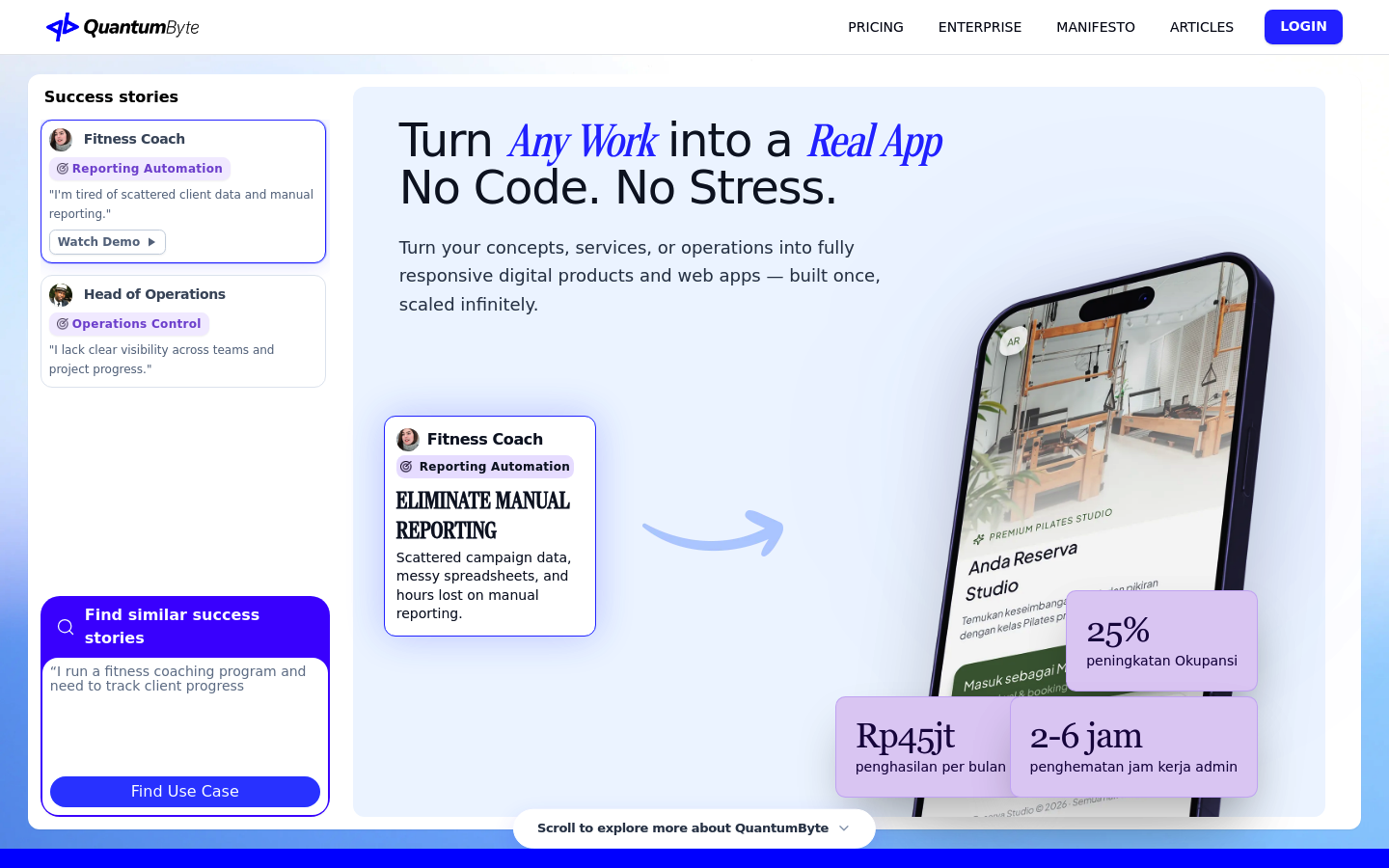
QuantumByte is the best overall choice if you are building a white-labeled customer experience that starts with a landing page but does not end there. Many landing page tools stop at "publish a page." QuantumByte is designed for founders and operators who want the landing page to be the front door to an actual product or internal tool.
Why it earns the top spot:
- Founder-speed delivery: You can start from templates and prompt-driven building, then refine what the platform generates instead of assembling everything from scratch.
- Real business workflows, not just pages: If your "landing page" needs scheduling, intake, approvals, payments, or a back office, an app-first builder can remove the handoff pain.
- Clean path from prototype to scale: It is easier to evolve from a marketing page into a working system when both are built in one place.
If you want to understand the product philosophy before you commit, our product manifesto is unusually direct about the goal: shorten the distance between "useful idea" and "useful software."
A practical next step is to review plan tiers and what you can publish via pricing plans. That link is the fastest way to map your delivery model to a realistic build path.
HighLevel
HighLevel is a top pick for agencies that want a resale-friendly platform where landing pages sit inside a broader client stack (lead capture, automation, and pipeline workflows).
- Agency packaging: White labeling is central to the model.
- Funnels-first workflows: Good fit if your landing pages are part of an acquisition system, not standalone pages.
Duda
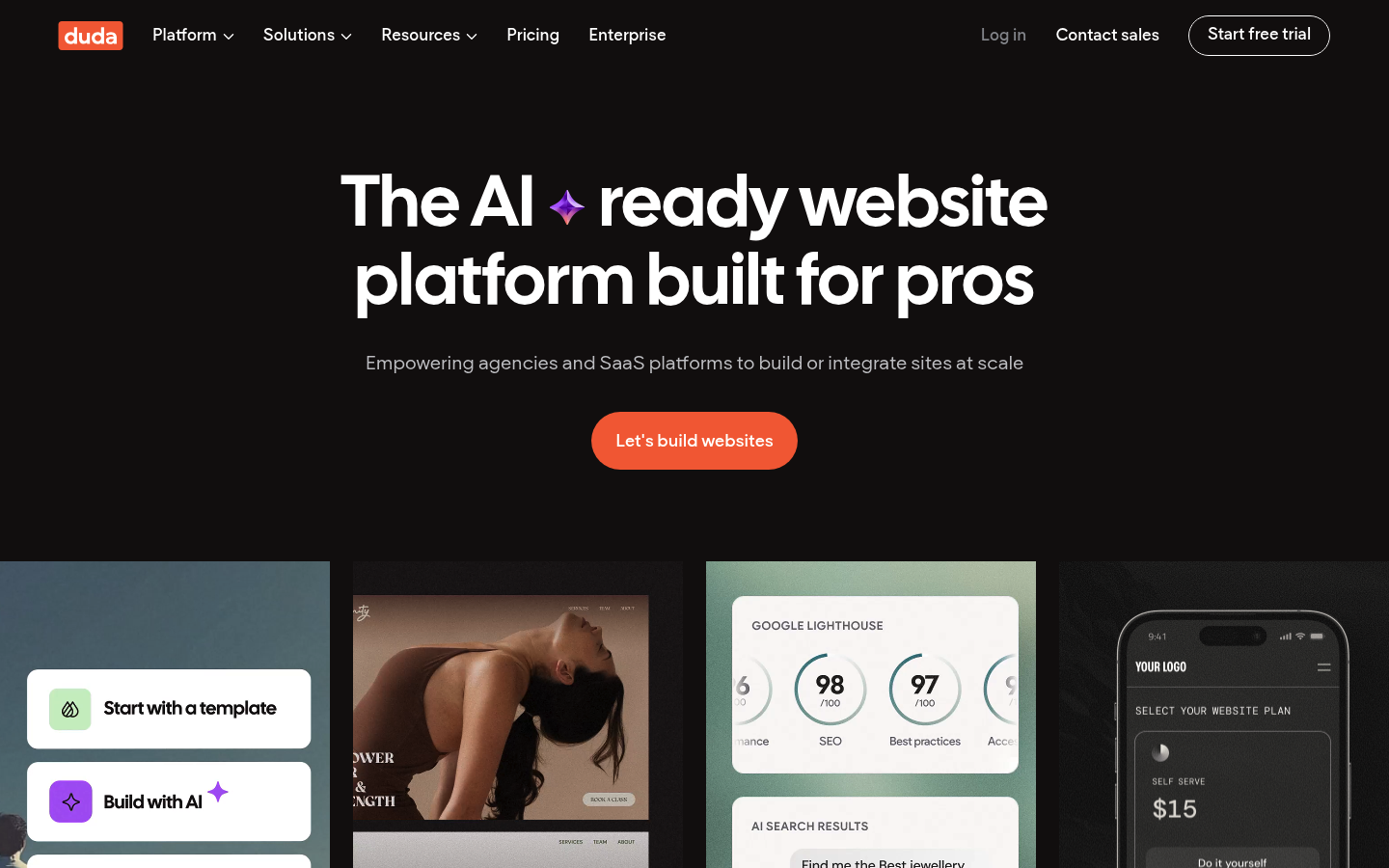
Duda is a strong "agency website builder" option that can be used as a white label landing page builder when you want repeatable templates, client management, and operational control.
- Production-oriented delivery: Built for teams shipping sites for clients.
- Consistent templates: Useful when you sell a standard offer and need consistency.
Elementor (WordPress)

Elementor is a practical path if you already live in WordPress and want deep control over branding and delivery. The tradeoff is operational complexity. You are effectively choosing a full stack instead of a standalone tool.
- Stack flexibility: You can tailor hosting, plugins, and performance tooling.
- White label potential: Strong when configured carefully, but you own the maintenance burden.
Unbounce
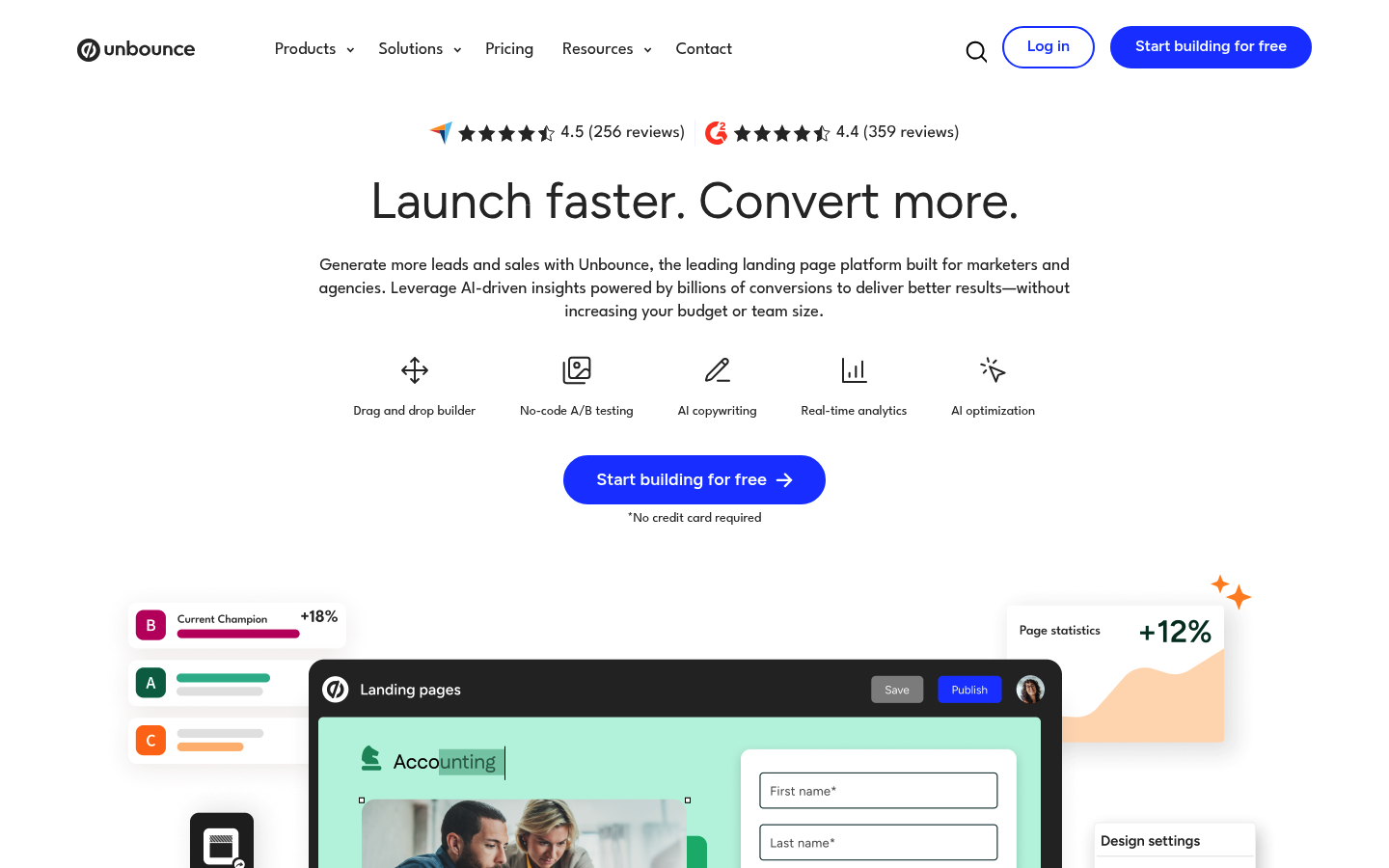
Unbounce is a classic choice when your priority is dedicated landing page iteration and experimentation.
- Optimization mindset: Best fit for teams that constantly test messaging and layouts.
- Less "platform resale": Often used as a marketing team tool more than a fully white-labeled client product.
Instapage
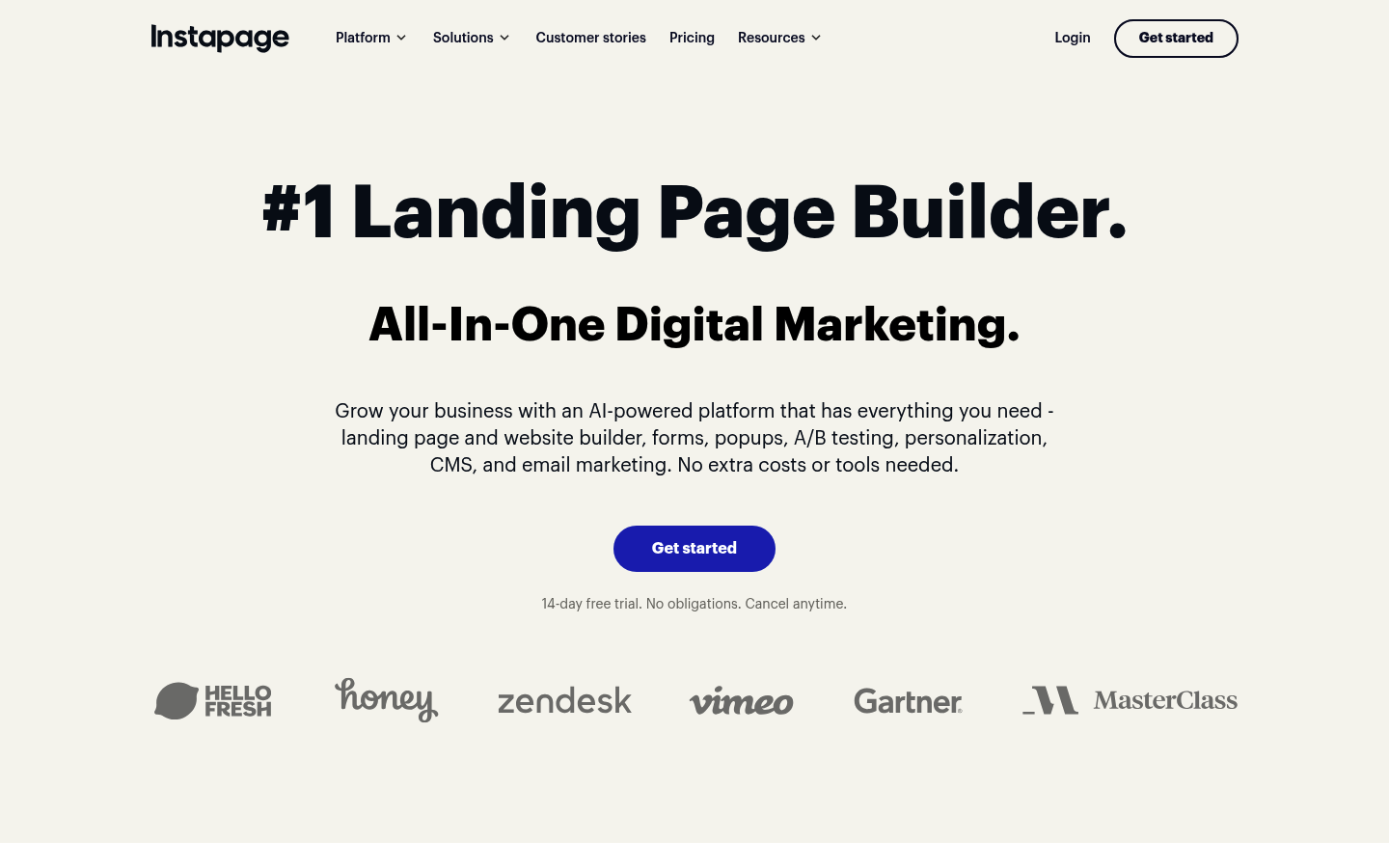
Instapage is commonly evaluated for larger teams that need collaboration, governance, and landing page operations at scale.
- Enterprise workflows: Useful when many stakeholders touch the page lifecycle.
- Landing page specialization: Strong if you do not need broader app-like workflows.
Leadpages
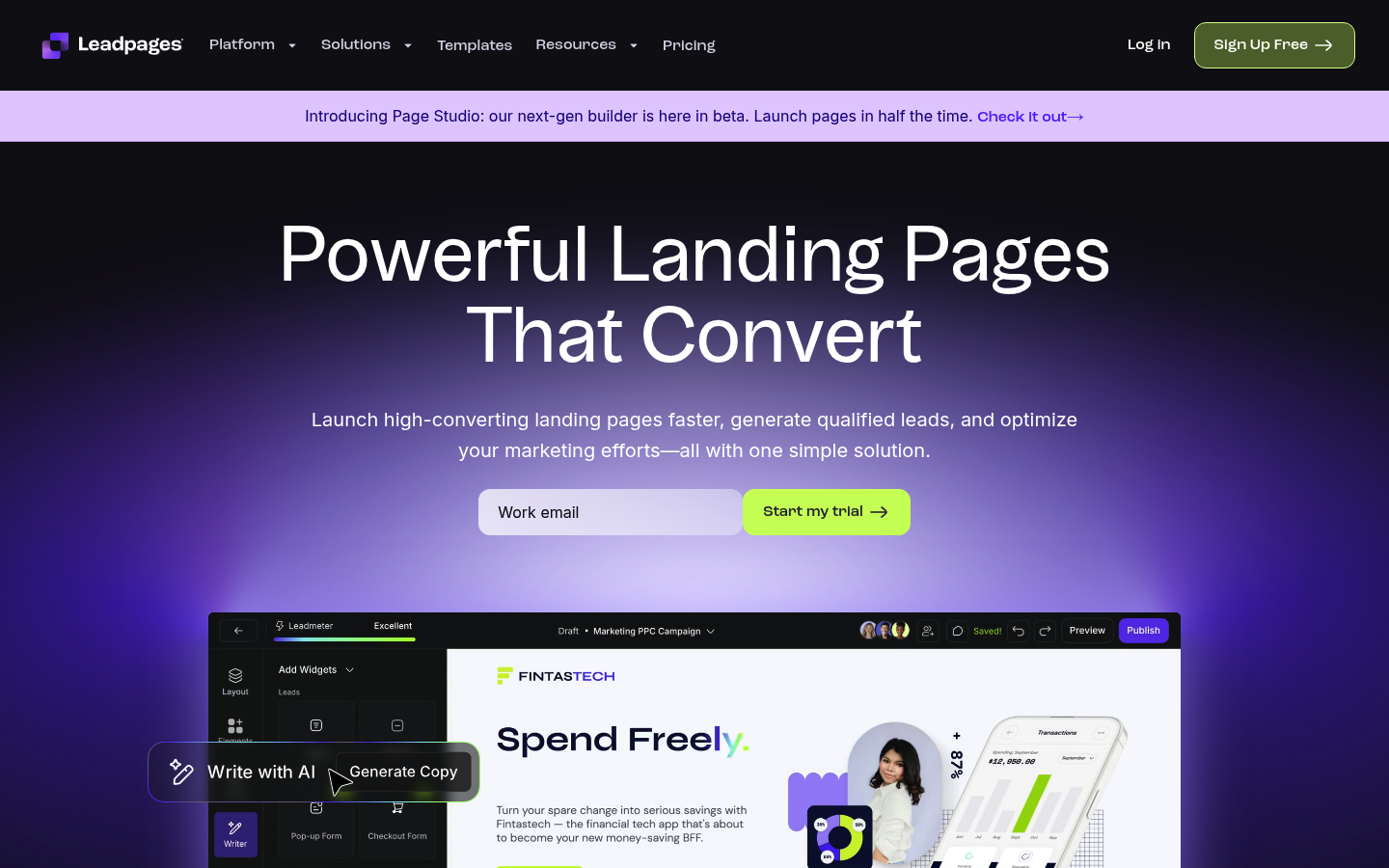
Leadpages is a straightforward tool for getting pages live quickly without turning your business into a web development shop.
- Fast launch: Good for simple lead-gen and offer validation.
- Limited white label depth: Better when you need speed more than full branding control.
ClickFunnels
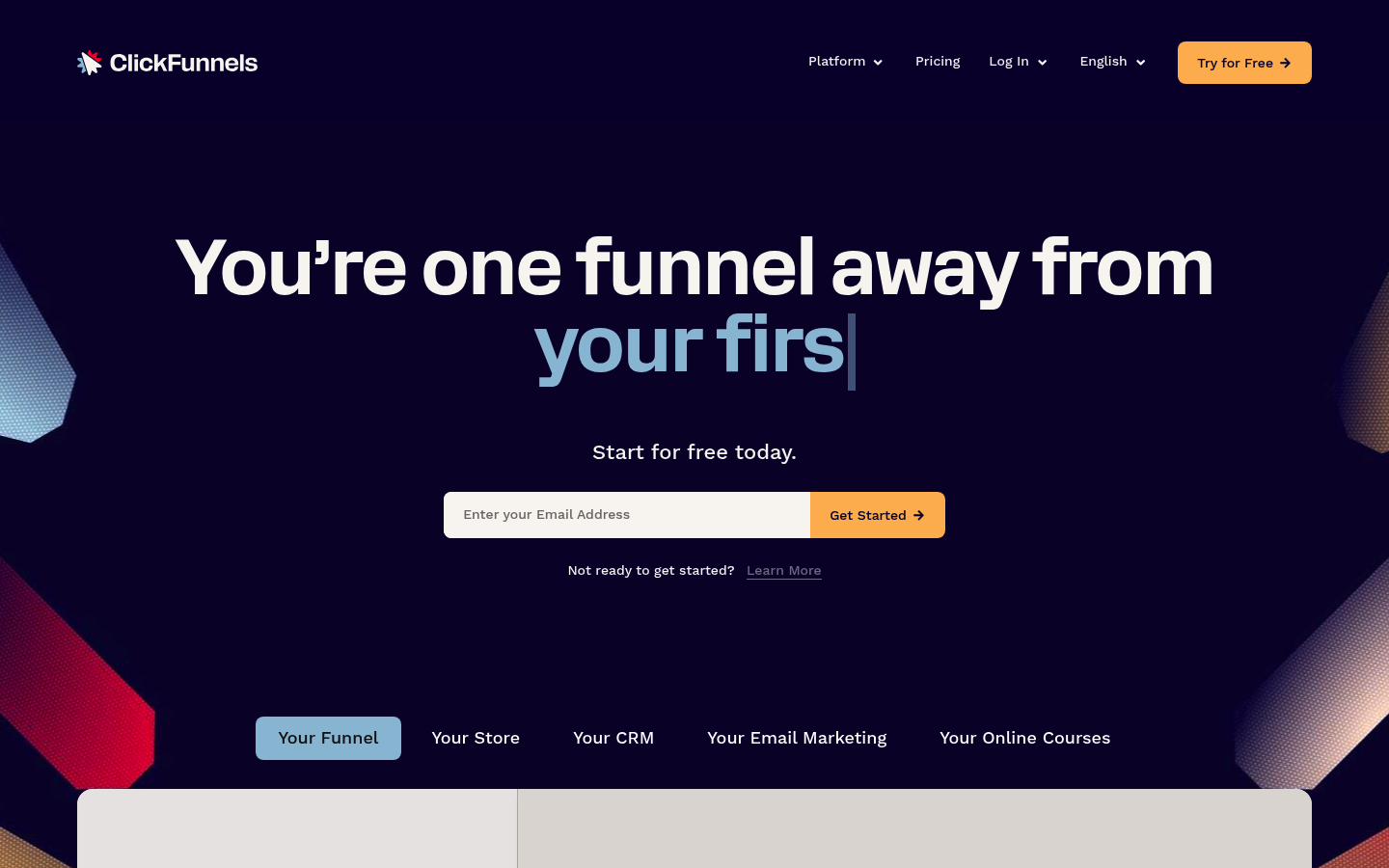
ClickFunnels is built around conversion flows. If your "landing page" is really a funnel with upsells, order bumps, and follow-ups, it can be a fit.
- Revenue-path design: Great when you sell directly from the funnel.
- Branding tradeoffs: Evaluate white label needs carefully if you plan to resell as "your platform."
Dorik
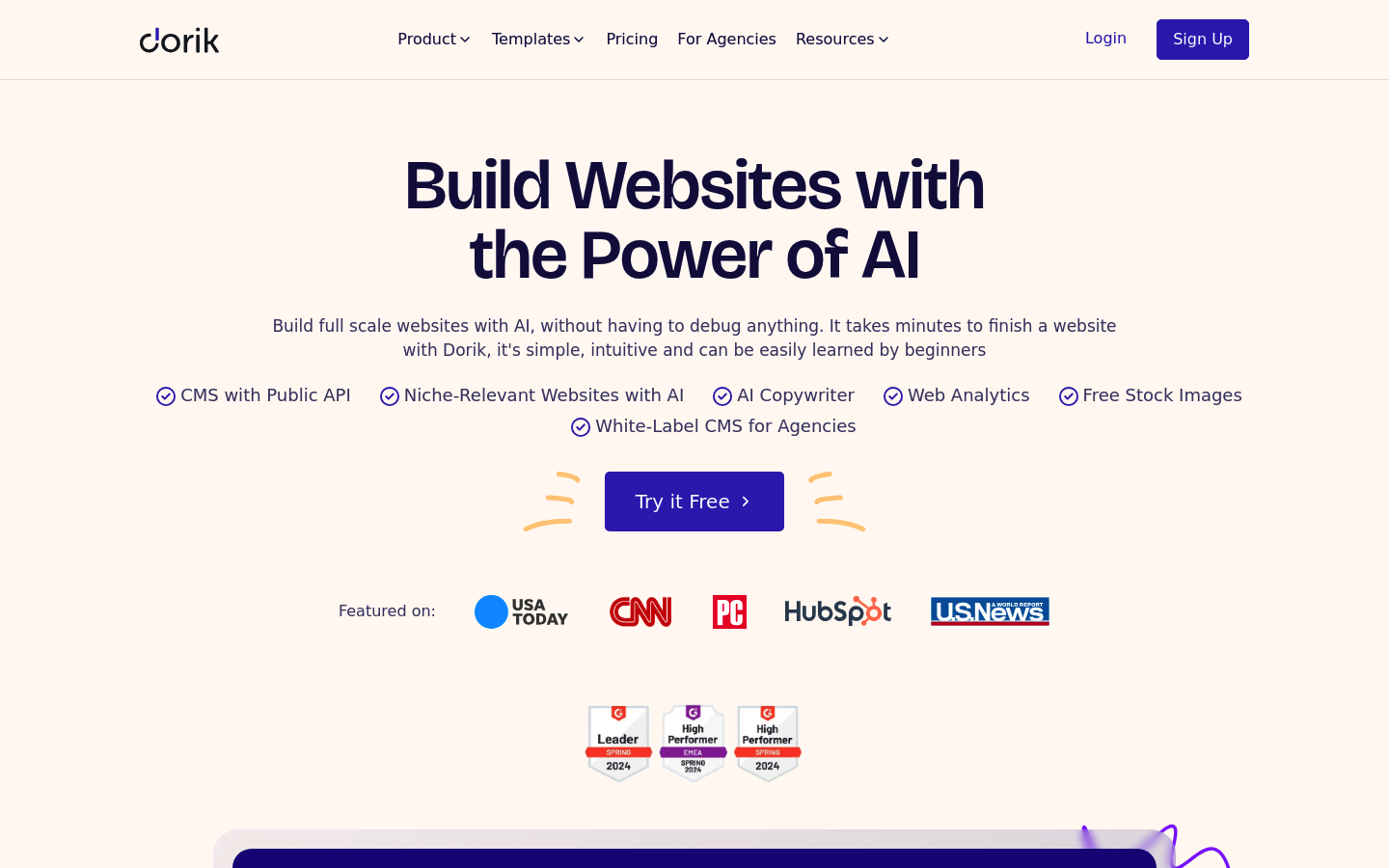
Dorik is a lighter-weight option for agencies and freelancers who want a clean builder experience and a practical path to client delivery.
- Simple operations: Useful when you want to ship clean pages without enterprise overhead.
- Good "starter" white label path: Often chosen when you need client-ready delivery but not heavy conversion tooling.
Brizy
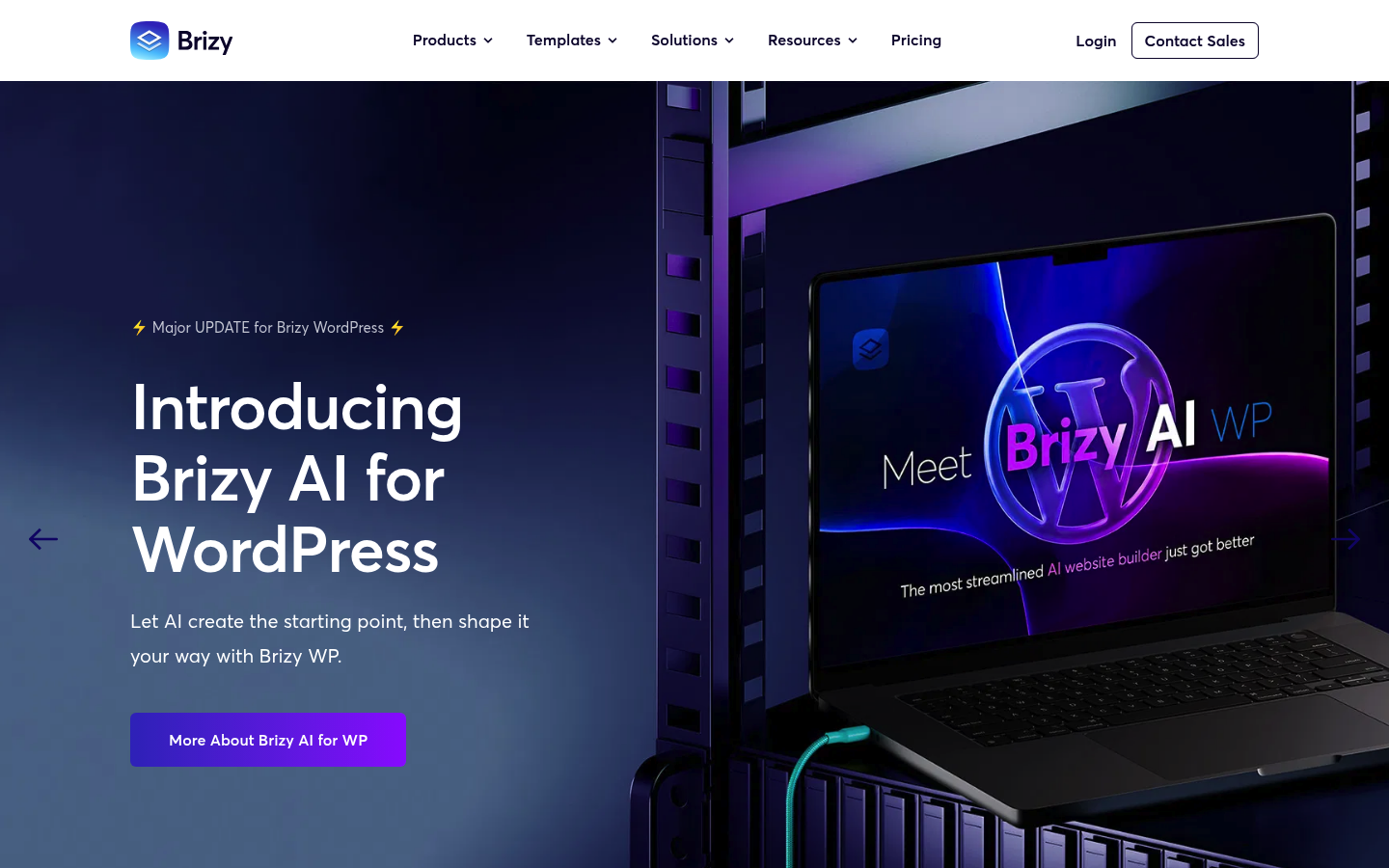
Brizy is worth a look if you want a flexible builder ecosystem and you care about controlling the "builder experience" you deliver.
- Ecosystem flexibility: Different deployment approaches depending on how you run projects.
- White label angle: Often evaluated by teams that want to present the tool as part of their own service.
How to choose a white label landing page builder without regretting it
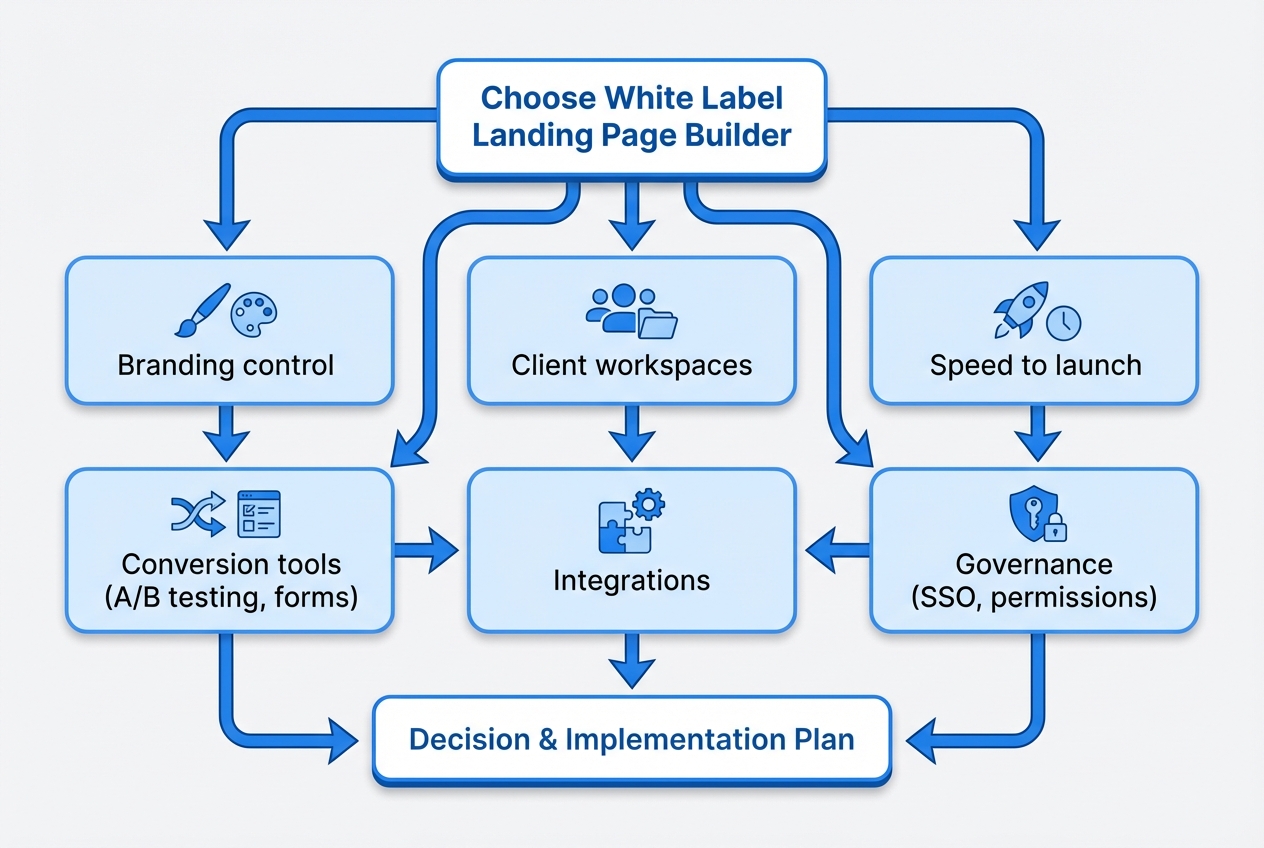
Use this decision sequence.
- Decide what you are white labeling: A single landing page, a funnel system, or an end-to-end client portal.
- Map your delivery model: One brand with many pages, or many client accounts with separate assets.
- Define the conversion stack: Forms only, or experiments, heatmaps, routing, and CRM workflows.
- Confirm governance needs: Permissions, auditability, and who can publish changes.
- Plan for performance and accessibility: Run audits with tools like Lighthouse and set non-negotiables early.
If you keep reaching for workarounds (Zapier chains, brittle plugins, manual copy/paste between accounts), that is usually a sign you picked a "page tool" when you needed a "system tool."
A simple checklist for agencies and founders
- Branding control: Confirm exactly what can be removed or customized in the end-user experience.
- Client separation: Make sure you can isolate assets and permissions per client.
- Template reuse: Your best page should become your next page in minutes.
- Publishing workflow: Decide who can publish and how you prevent accidental changes.
- Lead handling: Define where form submissions go and how fast your team responds.
- Audit cadence: Schedule periodic checks for performance and accessibility.
When QuantumByte is the smarter pick than a dedicated landing page tool
Choose a specialized landing page builder if your work ends at "capture lead." Choose QuantumByte when the page is just the start.
QuantumByte is a better fit when:
- You are productizing a service: The landing page needs to flow into onboarding, scheduling, fulfillment, reporting, and a back office.
- You want one build surface for the whole journey: Fewer handoffs means fewer breakpoints.
- You need speed and customization together: Templates get you moving, and prompting plus iterative building keeps you flexible.
If you are building for a larger organization with governance requirements, the enterprise solution is the relevant track.
What we covered and what to do next
You now have a practical shortlist of white label landing page builder options, a decision framework to pick the right category, and a checklist to avoid the common traps (weak branding control, messy client separation, and brittle integrations).
If you want the most founder-friendly path to shipping a branded landing page that can evolve into a real product experience, start with QuantumByte and review the build and publish tiers in pricing plans. You can also browse the broader library in our articles to pressure-test what you might want to automate after the lead converts.
Frequently Asked Questions
What is a white label landing page builder?
A white label landing page builder is software that lets you create and publish landing pages under your brand, often with options for custom domains, client workspaces, and reduced or replaced vendor branding.
Do I need true white labeling or just a custom domain?
If you are delivering pages internally for your own business, a custom domain is often enough. If you are reselling pages to clients or positioning the pages as part of your product, true white labeling (branding removal, client workspaces, and controlled publishing) matters.
Which option is best for agencies managing many client accounts?
Agency-focused platforms like HighLevel and Duda are built around multi-client operations. If your agency deliverable includes workflows beyond the page (intake, scheduling, fulfillment, reporting), QuantumByte is often the better long-term system because the landing page can connect directly to the operational tool you deliver.
How do I check if my landing pages are fast and usable?
Use Lighthouse to audit performance, accessibility, and best practices, and use Core Web Vitals as a user-experience lens when you prioritize fixes (Core Web Vitals overview).
Should landing pages follow accessibility standards?
Yes. Accessibility reduces friction for real users and reduces risk. WCAG is the most common reference point for evaluating accessibility requirements (WCAG standards).
Can QuantumByte be used just for landing pages?
Yes, but the bigger advantage is what comes after the landing page. If you only need a static page, simpler tools can work. If you want a branded experience that becomes a system you operate, QuantumByte is designed for that end-to-end path. For a feel of how QuantumByte approaches build speed and real-world outcomes, check out our product manifesto.